![かぎ針編みレシピ・無料編み図 Ronique [ロニーク]|基本の編み方から動画解説まで](https://ronique.jp/wp-content/uploads/2025/04/ronique_toplogo.webp)
It is not uncommon for knitting books and knitting patterns on online shops to use yarn from overseas manufacturers.
Of course, it's fine to just knit with the same yarn, but sometimes you may wonder if you can use leftover yarn you have at home instead, or if you could use yarn from a domestic manufacturer that is easy to obtain.
I mentioned overseas yarn as an example, but even if the yarn used in the knitting pattern is made by a domestic manufacturer, if you want to use a different yarn, it's the same. You'll want to guess which yarn is similar in thickness to the yarn you're using.
For those who are just starting to knit, we will introduce how to make such decisions.
[Can you rely on "first glance"?]
Generally, threads have a band with the weight and length written on it, such as "40g (approximately 160m)."
If all the threads have the same gram weight, you can easily compare them without any hassle.
However, the number of grams varies, and simple comparisons are often not possible.
This time, I will use the information on the obi to find a yarn that is similar in thickness to Jamieson's Shetland Spindrift, a famous foreign yarn used in Fair Isle knitting.
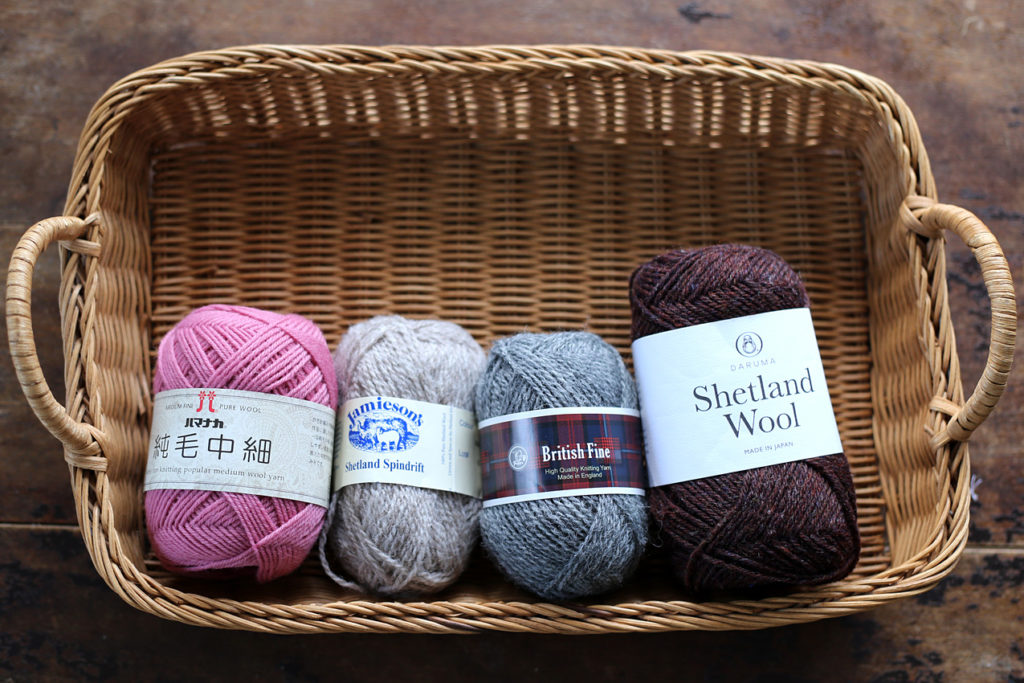
All the threads we will compare are from domestic manufacturers.
The images above, from left to right, are Hamanaka's "Pure Medium-Fine Wool", "Jamieson's Shetland Spindrift", Puppy's "British Fine", and Dharma's "Shetland Wool".
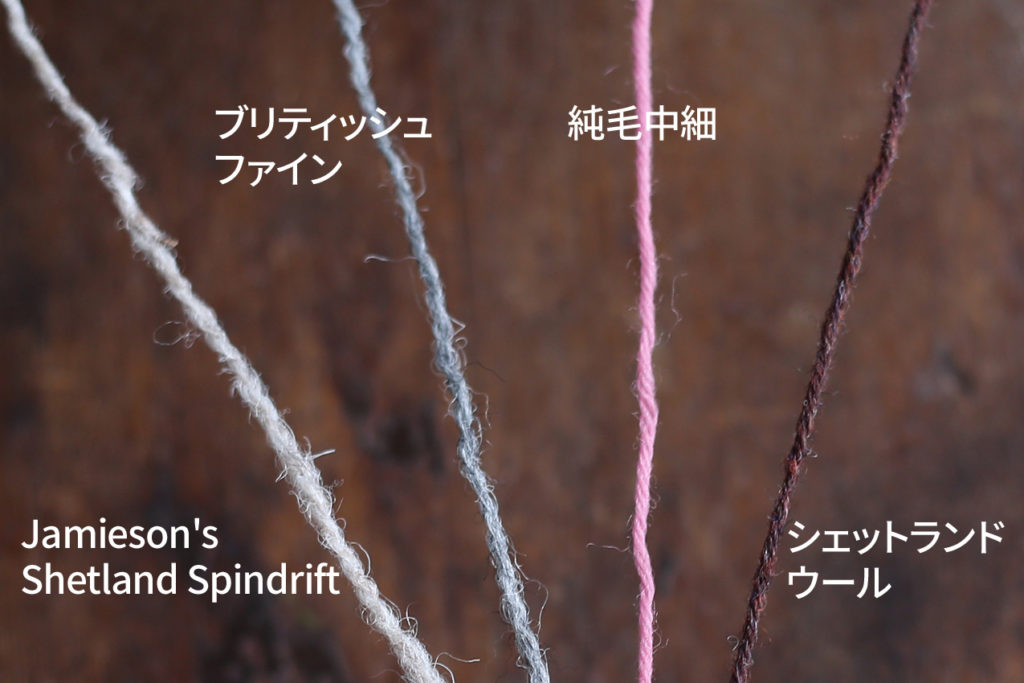
If you zoom in on the thread, it looks like this.
Which one is closest to Jamieson's? My impression is that it might be something like "Shetland Wool."
It's a good idea to visually check the gauge and try knitting it with yarn of a similar thickness, but this time, I'll use the numbers as a guide before knitting the gauge.
[Gram weight and roll length]
Next, look at the yarn label.
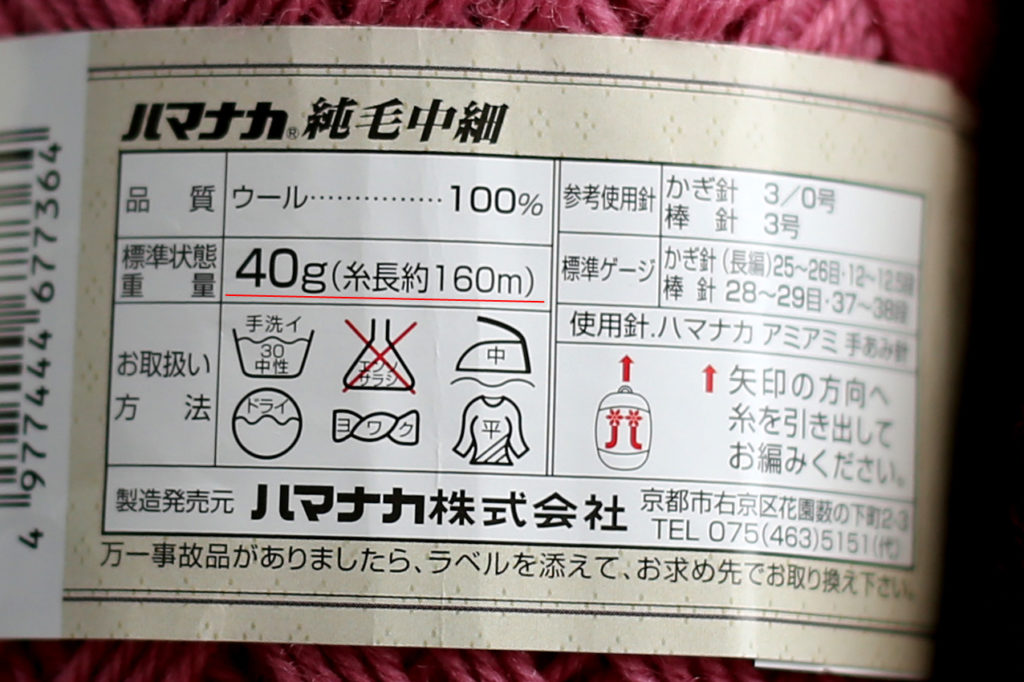
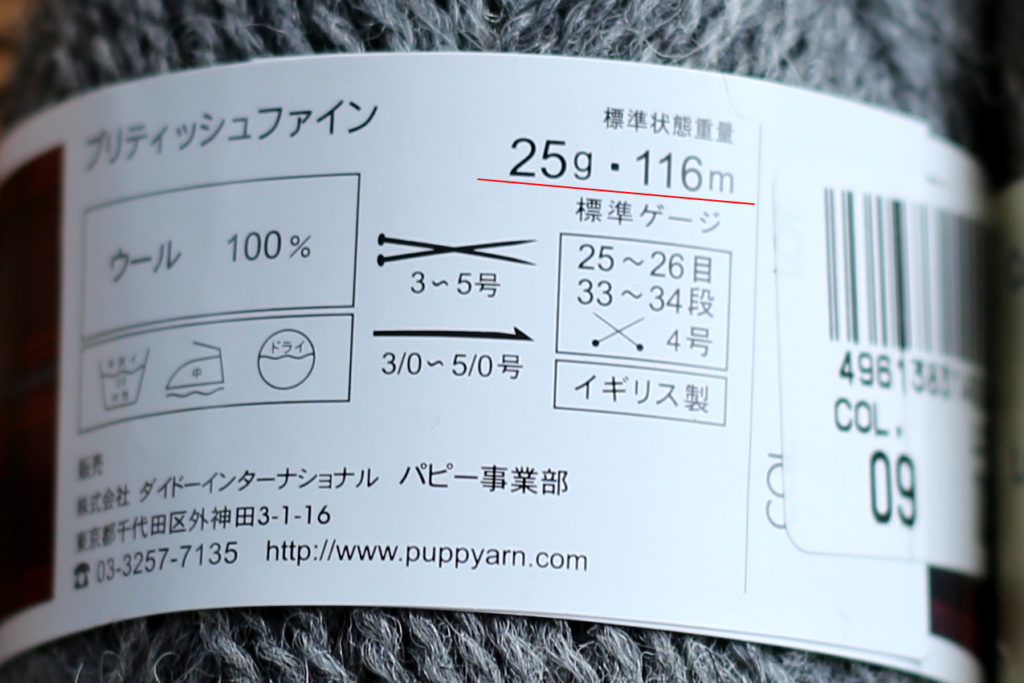
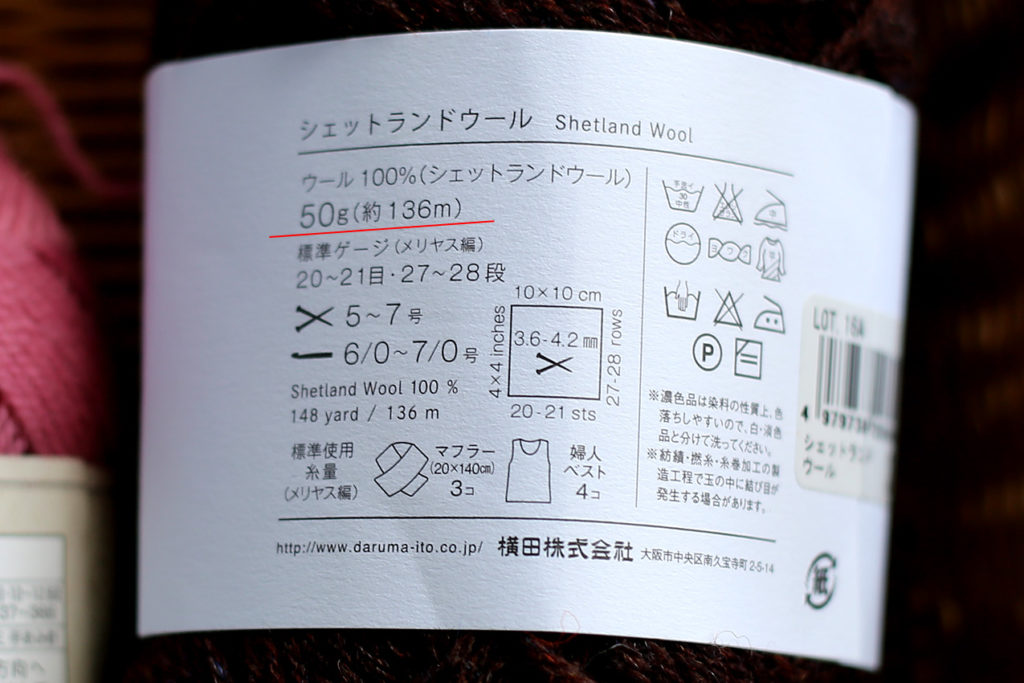
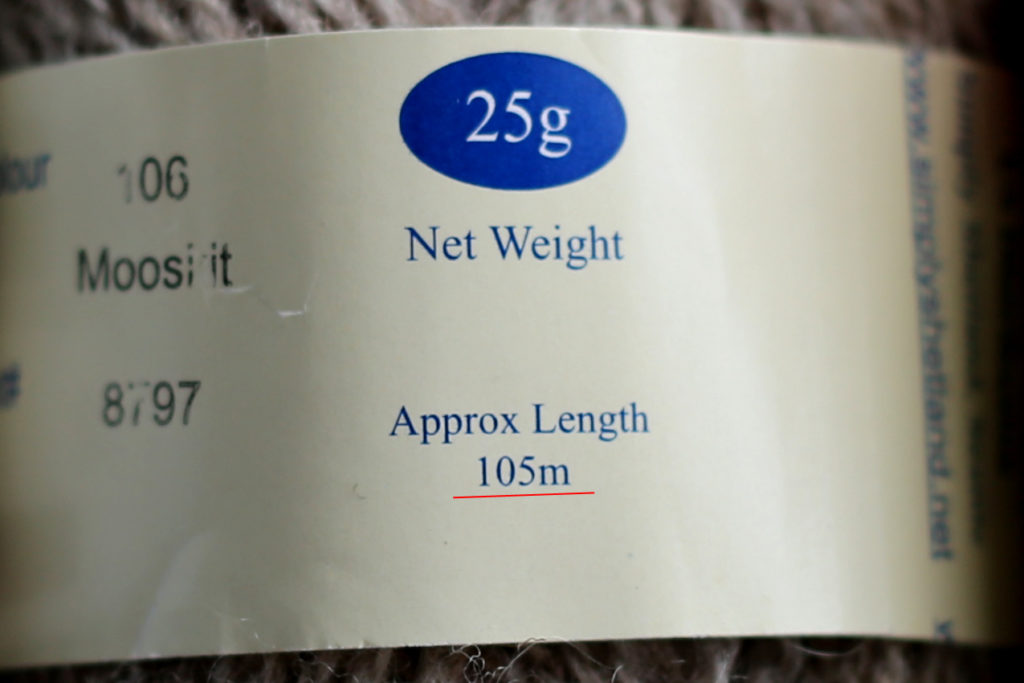
Now let's compare the numbers.
Jamieson's: 25g, 105m
Pure wool medium fine: 40g, 160m
British Fine: 25g, 116m
Shetland wool: 50g, 136m
Jamieson's and British Fine are easy to compare because they have the same gram weight. However, if you don't know how many meters of other yarn there are in the same 25g weight as Jamieson's, you won't be able to compare them.
[Calculate the ratio]
So, let's use some good old-fashioned "ratio calculations" to calculate it.
Those who are good at math will probably understand this without me having to say it, but even I, who am not good at math, find ratio calculations useful and use them often.
First, let's calculate from Jamieson's and pure medium-fine wool.
40g : 160m = 25g : xm
40 × x = 160 × 25
40x = 4000
x = 4000 ÷ 40
x = 100
Using this calculation, we can determine that 25g of "medium-fine pure wool" is approximately 100m.
The Shetland wool weighed exactly twice as much as the Jamieson's, at 50g, so divide the length of the yarn by two.
Now we can compare the same 25g as shown below.
Jamieson's: 25g, 105m
Pure wool medium fine: 25g, 100m
British Fine: 25g, 116m
Shetland wool: 25g, 68m
My impression when I saw it was completely wrong (lol), but numerically the result was that "pure medium-fine wool" was the closest.
There are some purchases, such as online shopping, where you cannot actually touch the yarn, so I hope this is helpful to show that there is a way to compare prices using only numbers.
However, you won't know exactly until you try knitting, so when knitting a large piece, first narrow down your options by calculating the ratios, then measure the gauge to check.
I will be measuring the gauge of this yarn and testing it soon, so please wait a little while for more information.