

Index
A crocheted washcloth made with water-resistant yarn.
I crocheted a wash towel using back and forth crochet.
It uses linen thread, which is durable and great for use around water.
I happened to have some leftover yarn, so I knitted it until I used it all up and finished it! I didn't think too hard about the size, I just went with a feeling that it would be about right.
Adjust the width by changing the number of cast-on stitches, then just keep knitting back and forth until you reach the right length!
Please try knitting it to your preferred size.
When you think of a project that involves "casting on a chain and then knitting back and forth," some people may think of a scarf or shawl.
This project involves knitting a simple rectangle without increasing or decreasing the number of stitches.
This recipe can also be used to make scarves, lunch mats, and more by changing the width and length, so have fun changing the material and shape.
As you can see in the image below, it could also be used to cover a basket.

Now, this wash towel is actually knitted using the same fabric as the one I've been using for bath time all this time.
The previous owner knitted it using stiff flax-colored linen yarn.
I've been using it for years and it's quite faded, but it's still very useful.
It becomes soft when wet, and dries crisply when hung in the bathroom to dry.
Recently, I discovered that one spot of the yarn was about to break, so I thought it was time for a successor, and this time I tried knitting it in white.
In my home, my children also use washcloths knitted from linen yarn.
I've been using it quite roughly, and it often falls off because it's not dried properly, or it's left soaking wet because the water hasn't been drained off, but surprisingly it hasn't gone mushy and I've been able to use it for many years.
I have also used wash towels with circular knitting motifs, but I feel that back-and-forth knitting is more durable.
I personally speculate that this is probably because the load and tension are distributed more evenly when knitting back and forth...
Since it is a consumable item, if you have any leftover thread that you would like to use, please consider using it as one of your options!
Preparation and necessary materials for "wash towels"
Yarn and Crochet Hook Size
Zakka Stores Grace Yarn, 40g ball, approximately 105m, color number 01...50g
3.0 mm (JP 5/0)
Finished size
Height 37cm x Width 17cm

Knitting pattern for "wash towel" | Crochet pattern
Washcloth knitting pattern (PDF)
- This crochet pattern is in PDF format, making it easy to print on A4 size paper.
- If you are saving and viewing the image on your smartphone or other device while crocheting, simply tap to enlarge it.
- Please read the "Terms of Use" before using the patterns.
Detailed instructions and steps for making a "wash towel"
Please refer to the knitting pattern along with the instructions below.
① Start knitting by casting on the chain.
If you make the number of cast-on stitches "4 times + 1", the pattern on the first row will fit perfectly.
Knit the chain a little longer until it reaches the width you have in mind, then knit the first row and you can untie the excess chain later.
②For the first row, knit one chain on the other side and the back of the chain, and continue knitting as shown in the knitting pattern.
Black symbols in the knitting pattern represent odd rows, and grey symbols represent even rows.
To crochet double crochet in even rows, wrap the chain from the previous row around the entire stitch and insert the needle into the stitch from the row before that.
From the third row onwards, for the three double crochets in each odd-numbered row, gather the chain from the previous row into a bundle and crochet.
Knit back and forth until you reach the desired length, finishing with an even number of rows.
③Once you have finished knitting an even number of rows, continue knitting a slip stitch.
With the idea of reinforcing the edge, work a slip stitch through all the stitches in the last even row, then cut the yarn.
Since it will be used around water, it is a good idea to keep a close eye on the threads.
Top 3 Most Popular Patterns in Lifestyle & Decor | Ronique Store
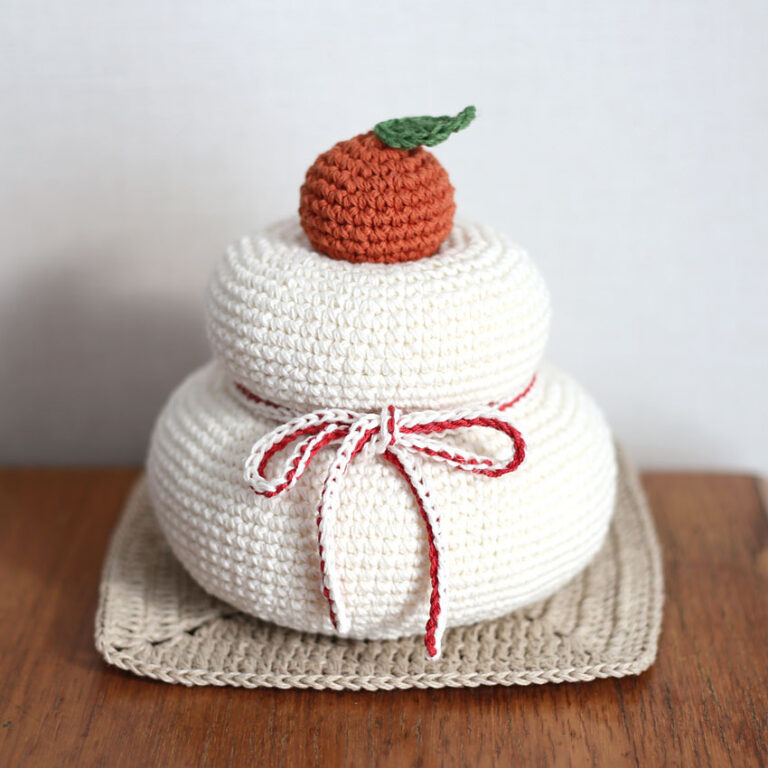
[No.1] Assembled Kagami-Mochi
This has been our best-selling product since its release, consistently being our most popular item.
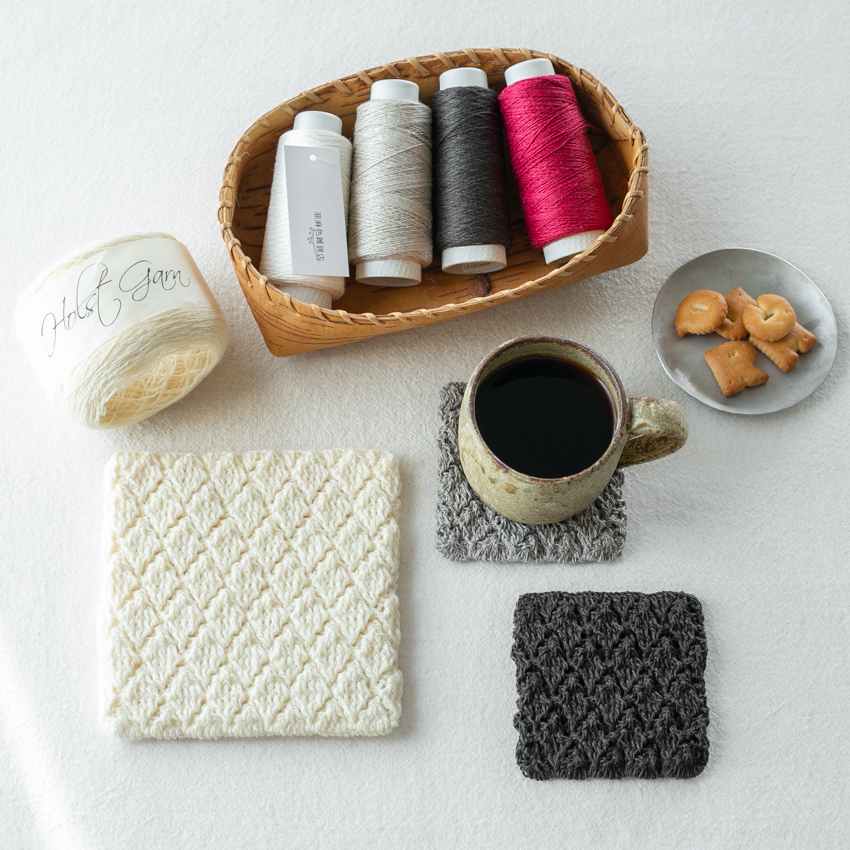
[No.2] Mindful Mat
Featuring a large leaf pattern and wide shoulder strap, this bag is a popular item both in Japan and internationally.
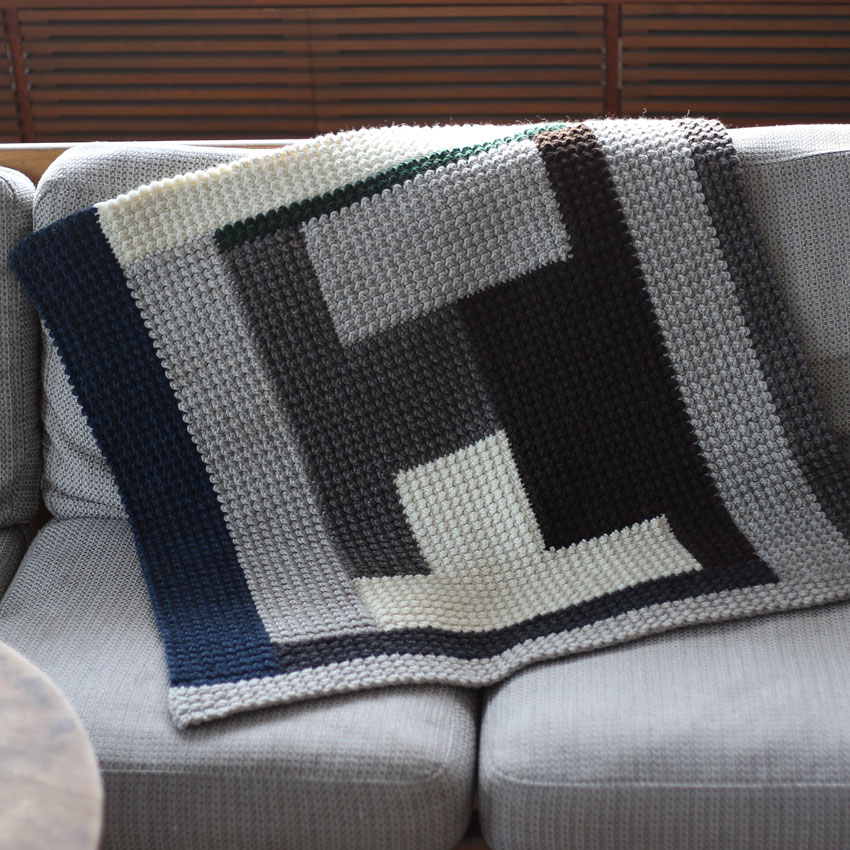
[No.3] Seamless Blanket
The crocheted lining helps the bag keep its shape. This design has been a longtime favorite.

