![かぎ針編みレシピ・無料編み図 Ronique [ロニーク]|基本の編み方から動画解説まで](https://ronique.jp/wp-content/uploads/2025/04/ronique_toplogo.webp)
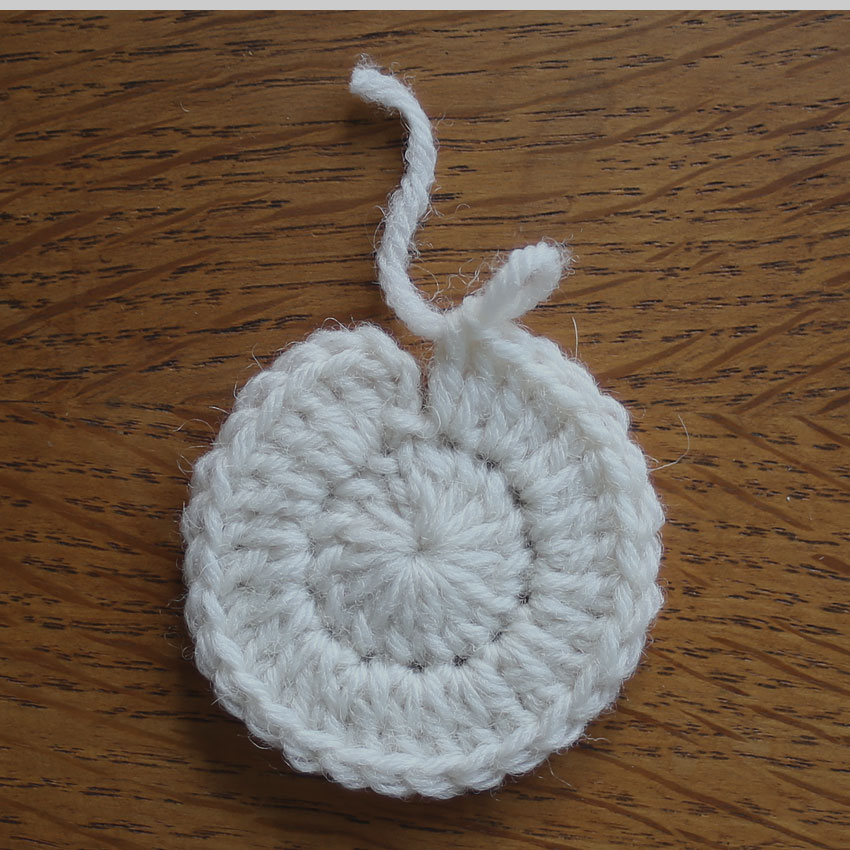
In crocheting, at the beginning of each row, you make a chain called a "starting chain."
The number of stitches to knit for the starting chain varies depending on the project, and the number of stitches is also related to the height of the stitches.
If you measure the basic height of a crochet stitch by the number of chain stitches, a good guideline is that for a knit stitch it is the height of one chain stitch, for a double crochet it is two stitches, and for a double crochet it is three stitches.
For example, if you are working entirely in double crochets, you cannot start a row by suddenly starting with a tall double crochet. Therefore, you should chain three stitches that are the same height as the double crochet, and then start the double crochet.
The first chain you weave in this step is the "starting chain."
Now, we will explain the basic crochet techniques and the chain at the start of a stitch by looking at the knitting pattern and the actual knitted fabric.
Index
Chain at the start of a double stitch
First, let's look at the double crochet back and forth stitch, which is the easiest way to see the chain at the start.
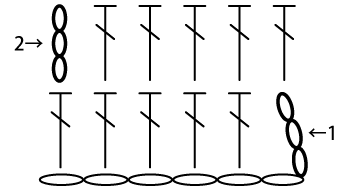
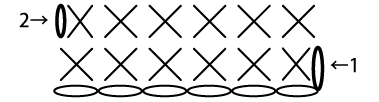
Here is an example of a knitting pattern showing a double crochet back and forth.
The bold symbol indicates the rising chain.
Looking at the pattern, you can see that the first three chain stitches are at the same height as the next double crochet stitch.
When crocheting double crochet, it is considered that "3 chain stitches at the start = 1 double crochet stitch."
Therefore, the three vertical chain stitches (starting chain) on the right side of the first row will replace one double crochet stitch.
The starting chain for the first row is knitted after the chain you made at the base, so the first double crochet is knit into the fifth chain from the closest to the needle.
The second chain is knitted after the last stitch of the first row.
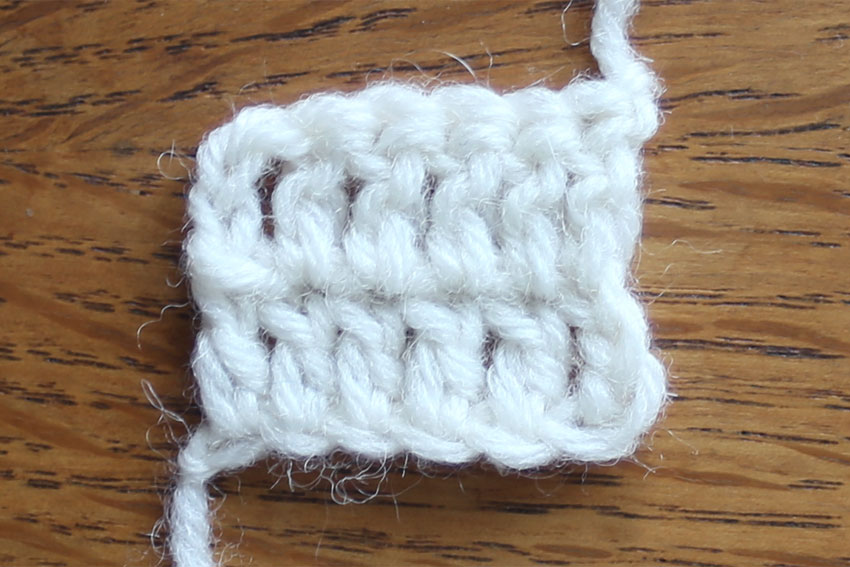
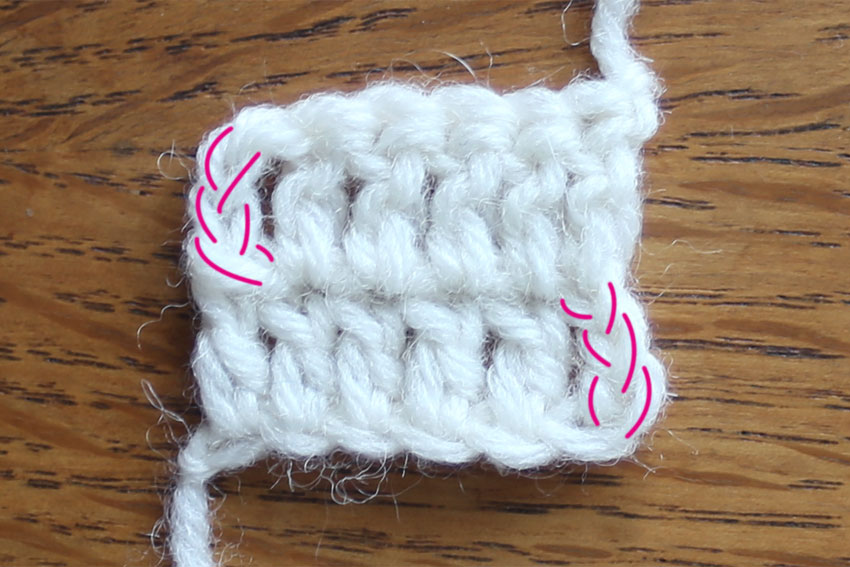
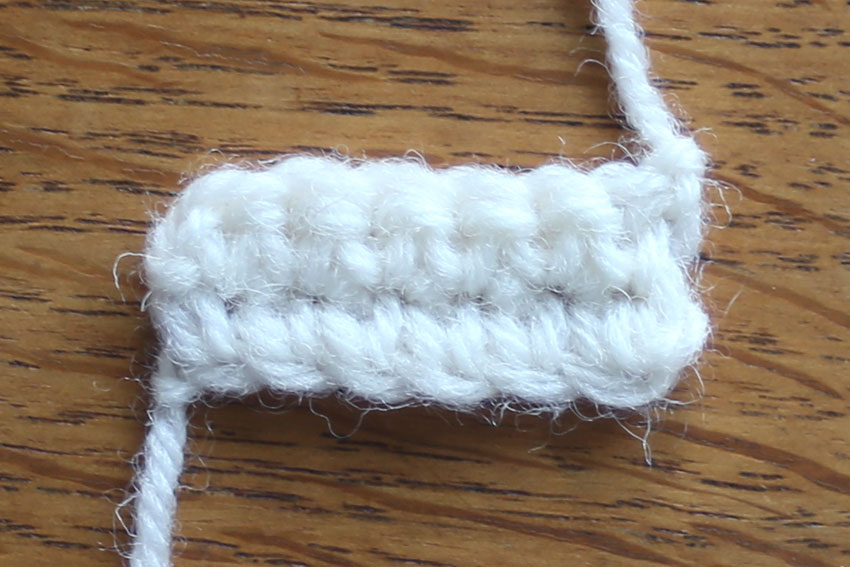
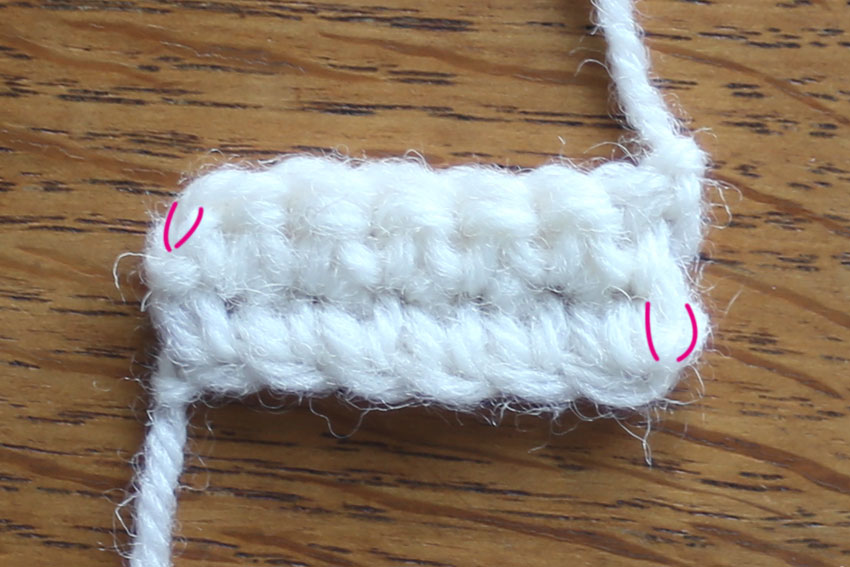
If you look at the actual knitted fabric, the areas indicated by the lines will be the rising chains.
Next, let's look at double crochet in the round.
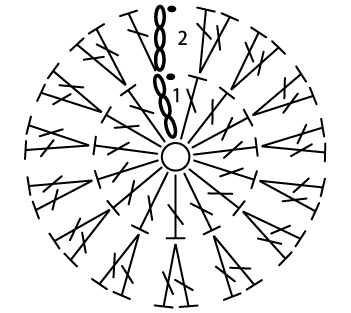
When knitting in the round, start each row by knitting three chain stitches to start the row.
Here too, we consider 3 chain stitches to be 1 double crochet stitch.
The second row is designed to knit two double crochets into every stitch in the previous row.
At the beginning of knitting, you will knit a starting chain and one double crochet, which shows that the starting chain is treated as one double crochet.
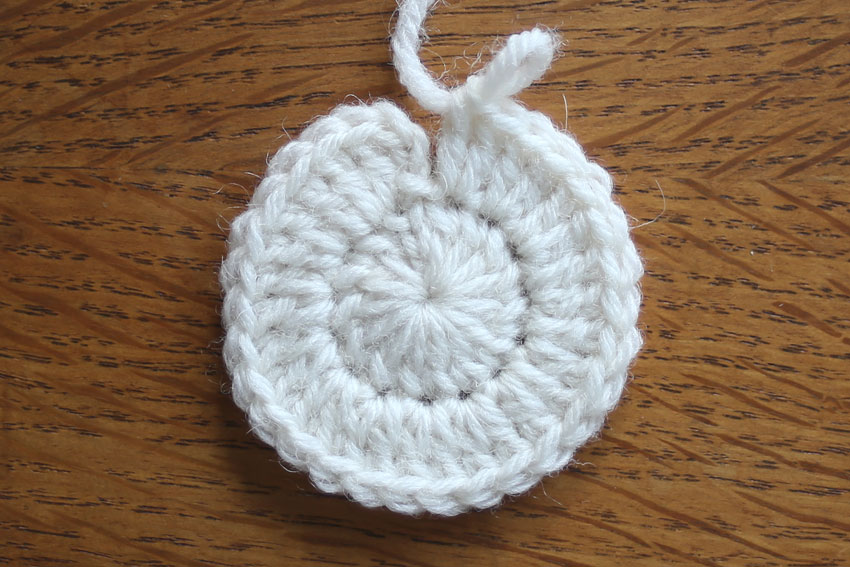
In actual knitting, it looks like this:
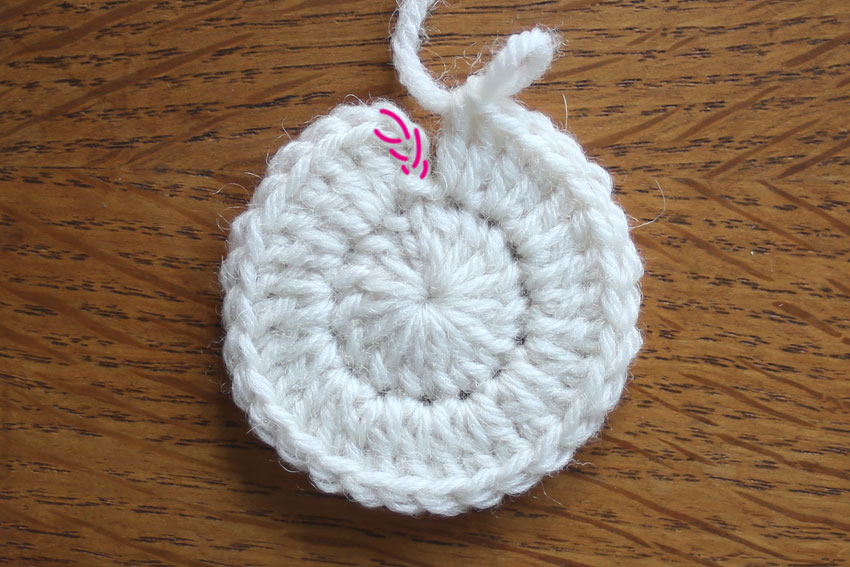
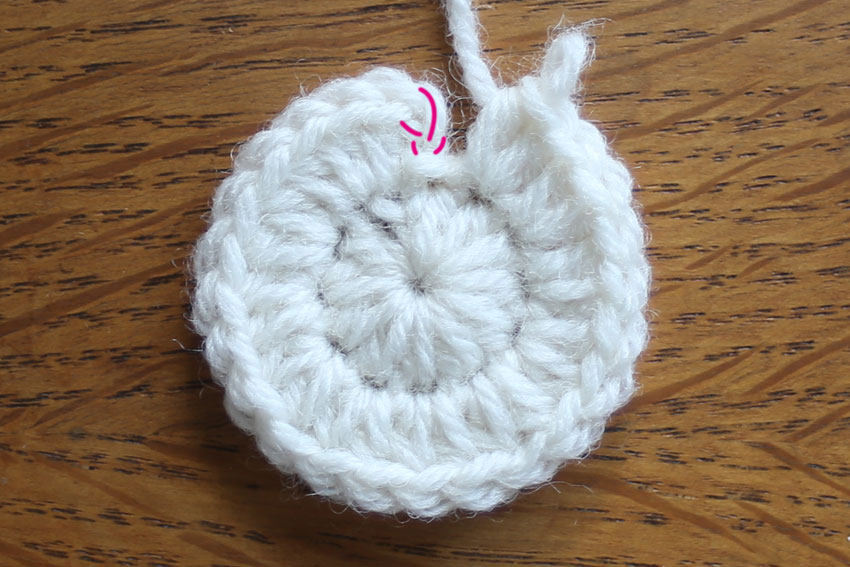
This is the state just before the final slip stitch of the second row.
The line indicates the third chain stitch of the starting chain.
Chain at the start of a double crochet
Next, we will look at the middle double crochet.
The stitches in double crochet are two chain stitches high, so when crocheting double crochet, you will need to crochet two chain stitches to start the work.
Just like with double crochet, double crochet is considered to be "2 chain stitches to start = 1 double crochet stitch."
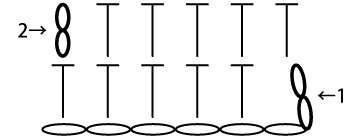
If you look at the knitting pattern, you will see that, just like with double crochet, the two chain stitches at the right end of the first row are treated as one double crochet stitch.
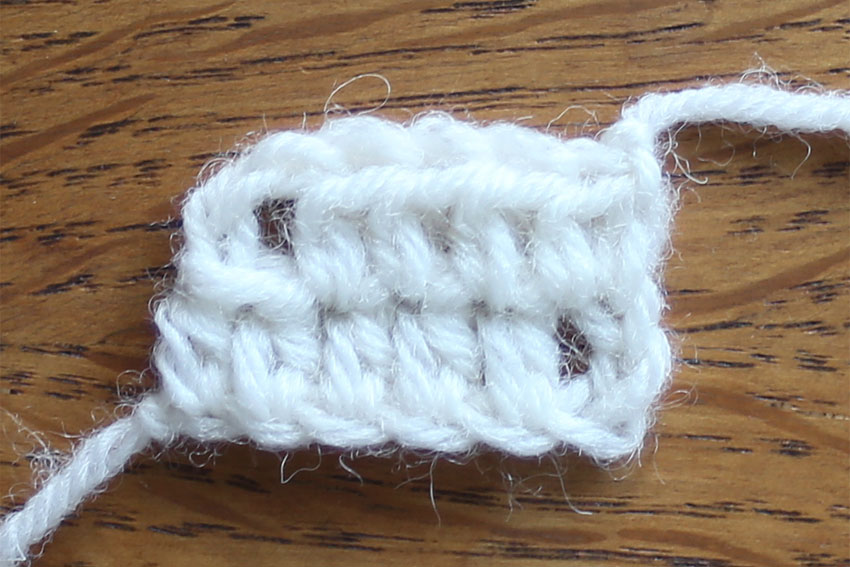
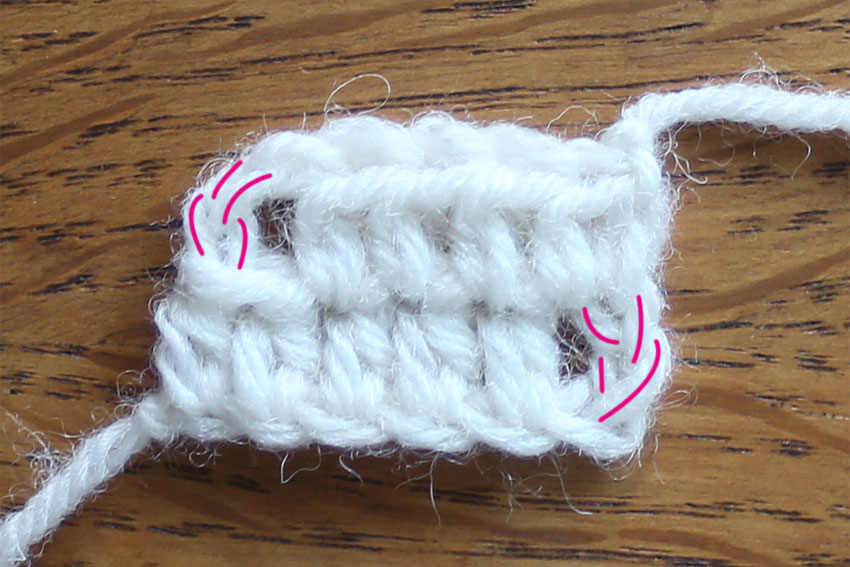
After the cast-on chain, crochet two chain stitches to start the work, and then crochet the first double crochet stitch into the fourth chain from the side closest to the hook.
This is what it looks like when knitted.
Now let's look at knitting in the round with two medium stitches.
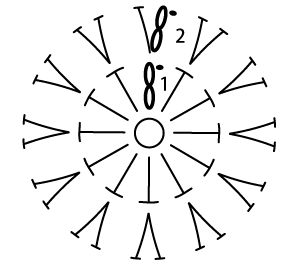
This is the same as double crochet, and if you look at the second row you can see that the starting chain is treated as one double crochet stitch.
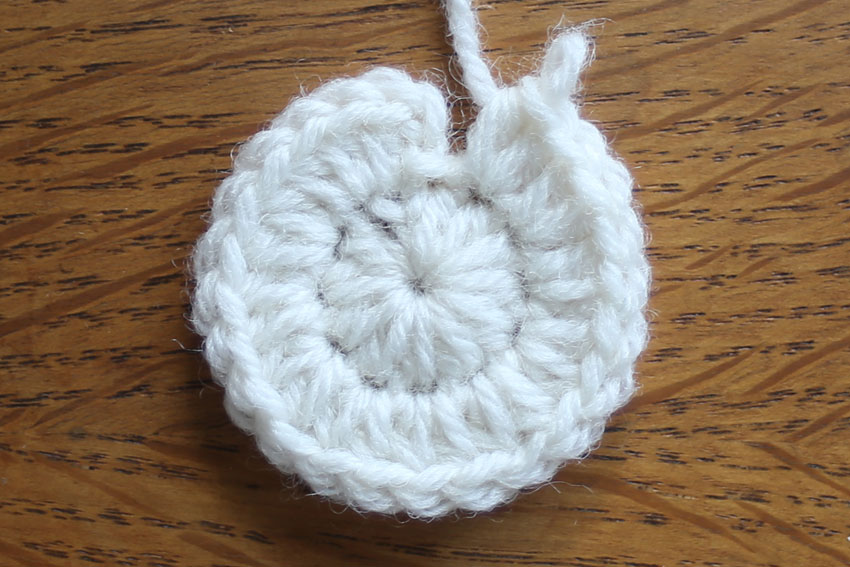
The knitted fabric will look like this:
Chain at the start of knitting
Finally, let's take a look at knitting.
The knit stitch is the height of one chain stitch, so the starting chain is also one stitch, but there are some differences from double crochet and double crochet.
Let's take a look at an example knitting pattern for round knitting.
Up until the point where you knit a chain to start the stitch and then a chain to start the stitch, it's the same as double crochet or double crochet, but when you look at the knitting pattern, is there anything different?
Can you see that the first stitch in the first row is different from when you are crocheting double or double crochets?
For knitting stitches only, "1 chain stitch = 1 knit stitch"Not considered, there is a difference.
Therefore, the first chain stitch and the first knit stitch form a set, and are the first stitches in that row.
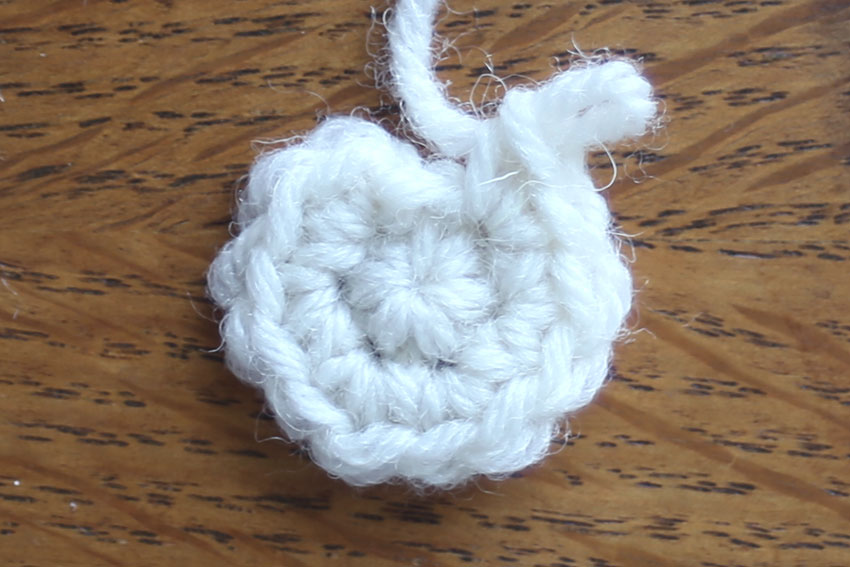
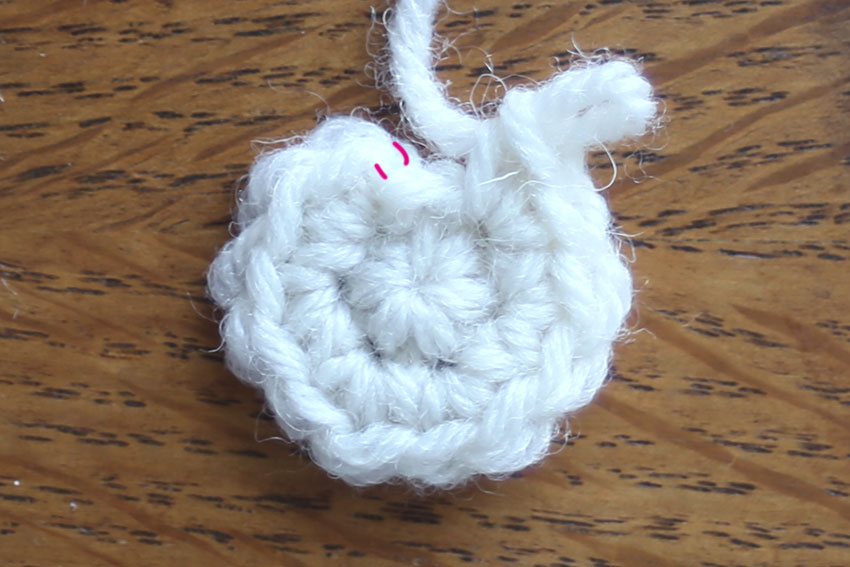
In the actual knitted fabric, there is one chain stitch at the start of the line.
Now let's look at knitting in the round.
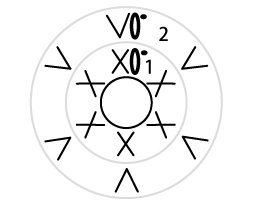
Here too, the knitting pattern for the second row calls for knitting two quarter stitches into every stitch in the previous row.
The symbol for knitting two small knit stitches at the start of the chain shows that the start of the chain is not counted as one small knit stitch.
In the actual knitted fabric, there is one chain stitch at the start of the line.
An exception to knitting a chain at the beginning of a knit stitch
The "starting chain" is generally used according to the rules explained above.
As an exception, it is possible to knit only the knit stitches without knitting the starting chain, so we will explain this in more detail below.
Let me explain with some actual images, but the two knitted pieces below have different knitting methods for the second row.
On the right is the knitted piece after starting with one chain stitch to start the knitting, just before making the final slip stitch of the second row. On the left is the knitted piece after going around once without knitting a chain to start the knitting.
The arrow points to the starting stitch and the line indicates the starting chain.
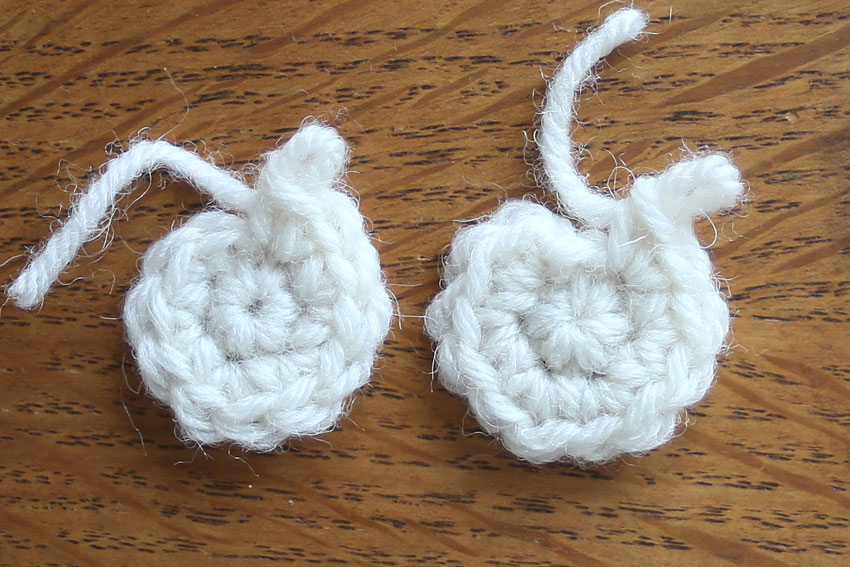
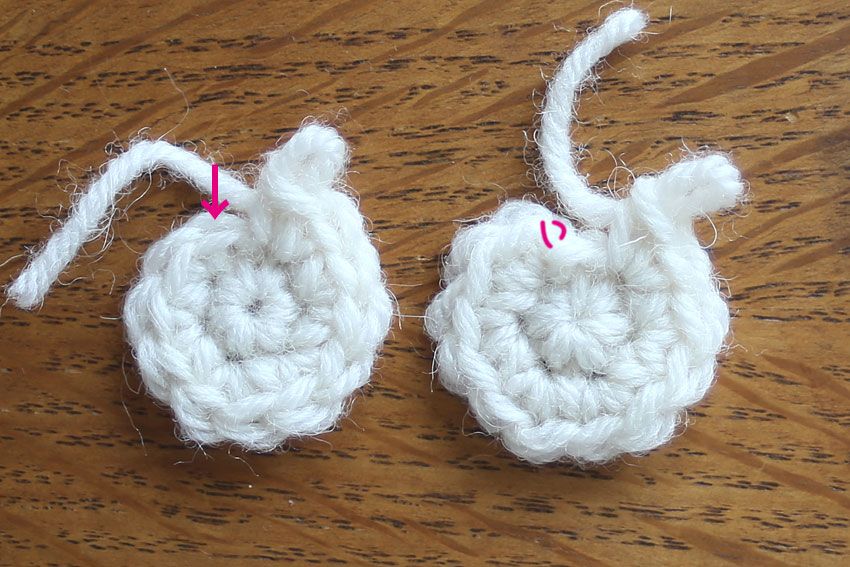
The knitted piece on the right has a chain at the beginning of the row, so the first stitch is high and distinct, and is the same height as the last stitch of the row.
By knitting a chain at the start of the row, it becomes easier to see the first stitch of that row, and when you knit a slip stitch after the last stitch, you will create a nice circle with no gap between the first and last stitches.
However, there is a drawback in that by knitting a chain to start the stitch and then knitting a slip stitch at the end of the row, the ``start point'' in the knitted fabric becomes more noticeable.
Therefore, when considering the design of a work, it may be a good idea to take into consideration where the starting point will be.
If you knit without knitting a chain at the start, as in the knitted fabric on the left, it can be difficult to tell which stitch is the first stitch of the row, so you need to be careful and mark the first stitch of the row.
Also, since there is no slip stitch at the end of the row, it is difficult to tell where the row ends, so it would be a good idea to mark it in some way so that you can check how many rows you have knitted after you have started.
The advantage of knitting without knitting a chain at the start of the row and without knitting a slip stitch at the end of the row is that there is no change in the row (start point), so the finished knitted fabric is neat.
If you check the starting position on the actual knitted fabric, you will see that it is the prominent vertical line below the arrow in the image below.
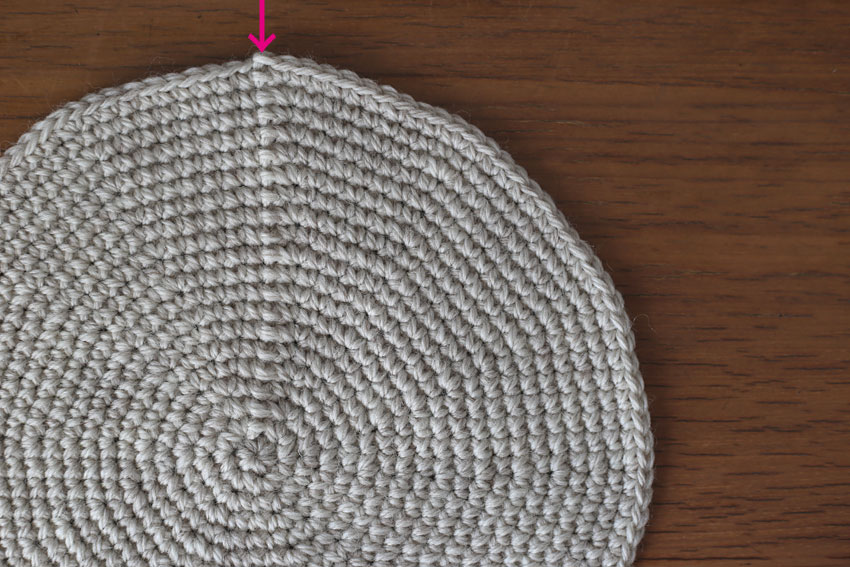
As you can see, with knitting stitches, you can choose whether or not to knit a chain at the start, and depending on the recipe, you may not need to knit a chain at the start, so keep this in mind when you are in such a situation.

