![かぎ針編みレシピ・無料編み図 Ronique [ロニーク]|基本の編み方から動画解説まで](https://ronique.jp/wp-content/uploads/2025/04/ronique_toplogo.webp)
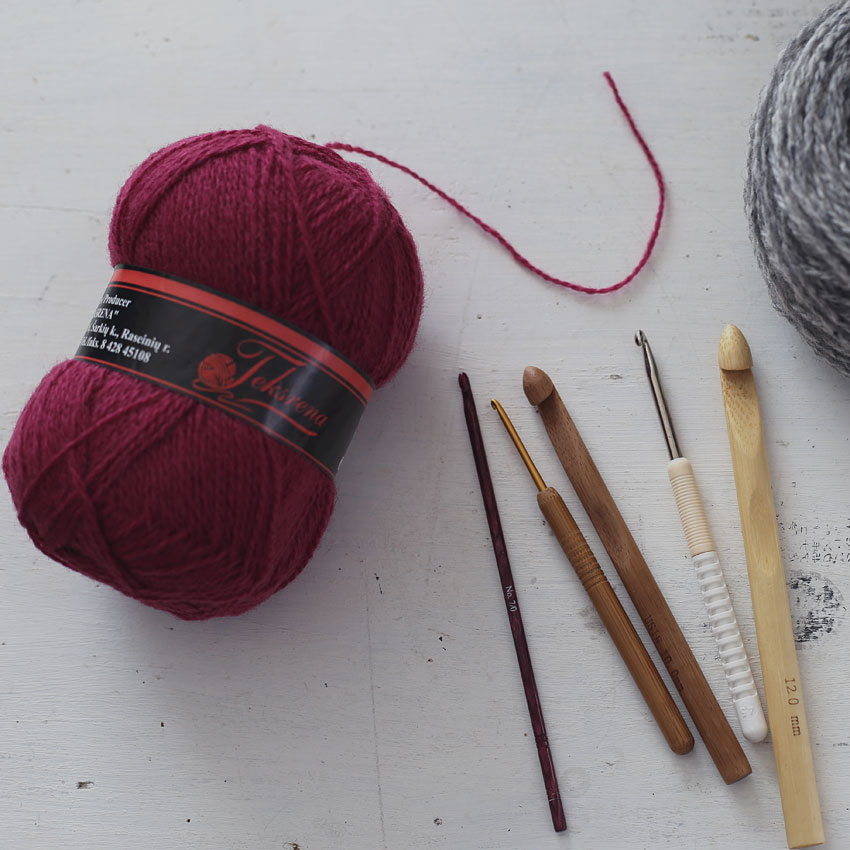
There are many different types of crochet, but first, you might want to get a quick overview of the whole picture! We've put together some information to help you with that.
You can knit a piece even if you don't know, but if you do know, you'll know what genre the piece you're currently knitting is in, which will make things a little easier.
Index
Crochet fabric
There are two main types of crochet fabrics.
There are two types of knitting: ``round knitting'', where you knit the fabric by turning it inside out, and ``loop knitting'', where you knit in a circular motion.
The way you start knitting will differ depending on whether you are knitting back and forth or knitting back and forth.
First, let's look at the differences between these two types of knitting.
Crochet back and forth stitch
・Uses of round trip knitting
Round knitting is a knitting method often used for projects that are knitted flat, such as clothing, scarves, and rectangular shawls.
If you knit back and forth without increasing or decreasing the number of stitches, you will end up with a rectangular or square knitted fabric.
・How to knit round trip
Assuming you are right-handed, when knitting back and forth, you knit from right to left on the knitted fabric, and once you have completed one row, knit from right to left while looking at the other side of the fabric.
This is a technique in which you knit back and forth, turning the knitted fabric inside out each row.
・Starting round-trip knitting
When knitting back and forth, start by casting on a chain.
The length of the chain determines the width of the knitted fabric. You can adjust the length of the chain by changing the number of chain stitches.
Once you have knitted the required number of chains, for the first row, insert the crochet hook into the chain you cast on and knit (we will explain this in more detail later).
・Front and back of round knitted fabric
For example, if you knit a piece entirely using knit stitches, the front and back will look almost the same, so you may not really care which side is the front.
When it comes to patterned knitting, the front and back of the knitted fabric often have different looks. In such cases, you should decide in advance which side will be used as the front of the project.
Generally, the side with the cast-on thread end visible on the left side is often used as the front side of the knitted fabric.
If you are finishing the piece with the back side of the knitted fabric (the side with the end of the cast-on thread visible on the right side) as the front, there may be a note saying something like, "This piece will use the back side of the knitted fabric as the front."
Crochet Crochet
・Uses of ring knitting
Loop knitting is a knitting technique that is often used to create bag- or tubular-shaped knitted items such as bags, hats, socks, leg warmers, and stuffed animals, as well as to knit concentric circles or concentric squares, such as motifs used to connect motifs.
In loop stitch fabric, the start of each row (the beginning of each row) may be noticeable or slanted, but the front of all the stitches are visible, so the fabric looks neat.
・How to knit a loop stitch
When knitting a loop stitch, always look at the right side of the piece. Start the row by knitting a chain at the beginning of the row, then knit from right to left (if you're right-handed). After knitting the last stitch of the row, finish the row by knitting a slip stitch into the first stitch.
・Beginning to knit a ring
There are two main types of starting stitches when making a loop stitch: one is a "loop cast-on" and the other is a "chain cast-on".
When you start knitting by casting on a loop, the knitted fabric will be bag-shaped with the center closed at the beginning of the knitting, like a bag or hat.
When casting on a chain, unlike when knitting back and forth, you connect both ends of the chain with a slip stitch and start knitting with the chain in a loop state.
If you start knitting by making a cast-on stitch along the chain, the knitted fabric will be tubular like a leg warmer, and you can continue knitting while leaving the starting side open.
・Front and back of the crocheted fabric
When knitting with loop stitches, you always keep an eye on the front side of the knitted fabric as you go, so the side that you can see while knitting is generally the front side.
In patterned knitting such as pommel stitch, when small bumps are visible on the back side, or in bead knitting (where the beads are visible on the back side), the back side of the knitted fabric can sometimes be used as the front side.
In some exceptional cases, a technique called "round crochet" is used, in which the knitted fabric is turned inside out each row and knitted in a circular motion.
Crochet cast-on
Earlier, we explained that there are two main types of crochet fabrics.
Here we will explain in detail how to make three types of stitches.
Foundation Chain
A chain cast-on used at the beginning of round knitting.
If the instructions for knitting a piece say, "Cast on 25 chain stitches," or "Start by casting on the chain and then knit 25 stitches," then the 25 chain stitches are the cast on chain.
On another page,How to knit "chain stitch" video explanation There is.
When starting to knit by casting on a chain, there may be instructions on the first row stating whether to pick up the chain's knot (the strand sticking out on the back side) and knit, or pick up the strand on the other side of the chain and the knot (both strands).
If there are no specific instructions, I think it's best to just knit in the way that is easiest for you.
Casting on a chain (casting on a chain)
When casting on a chain used in loop knitting, the chain is often made into a loop at the cast-on stage.
Once you have knitted the required number of chains, insert the needle into the first chain you knitted and make a slip stitch to make the chain into a loop.
In cases like this, if you have a knitting pattern, the first and last stitches of the cast-on chain will be joined with a slip stitch symbol.
Here too, if there are instructions on how to pick up the first row, follow those instructions when knitting.
On another page,Cast on the chain and slip stitchThere is a video explanation of this.
Creating a circle
To cast on a loop, knit the number of stitches you should have knit in the first row into the loop that you have wrapped the yarn twice, then make a slip stitch into the first stitch to form a loop. There will be some loose yarn left over in the double-wrapped loop, so tighten it.
On a separate page,How to knit "Koma Knitting Loop Stitch" Video Explanation、A thorough explanation of the "loop stitch" knitting technique However, I think it will be helpful for you to know how to cast on the loop.
How to pick up the stitches when making a chain
If you start knitting by casting on a chain, you will insert your needle into the chain you cast on and knit the first row. The finished result will be slightly different depending on where you insert your needle into the chain (which yarn you pick up).
Here we will introduce two ways to collect them.
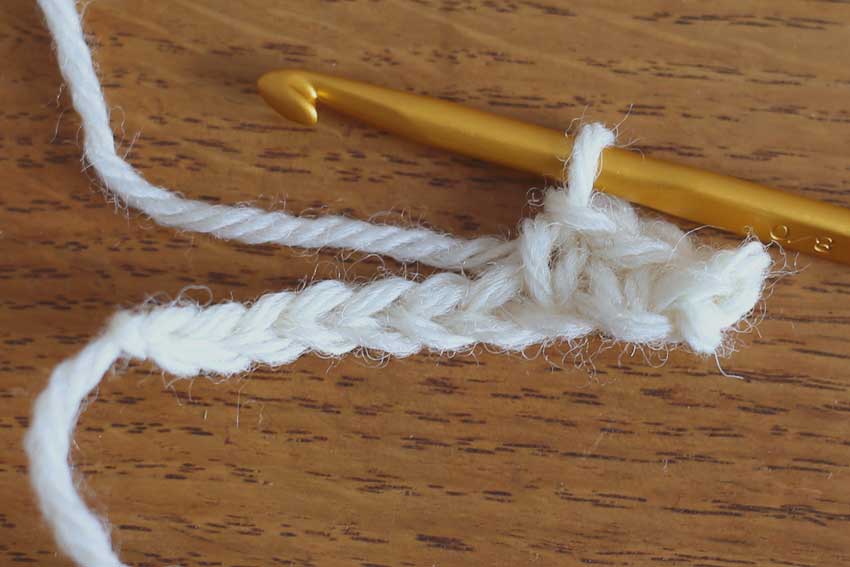
The first method, "picking up one chain on the other side and the knot on the back," is easy to knit and is recommended when you have a large number of stitches. The second method, "picking up the knot on the back of the chain," produces a neat finish and is recommended when you want to pay attention to the edges of your knitting.
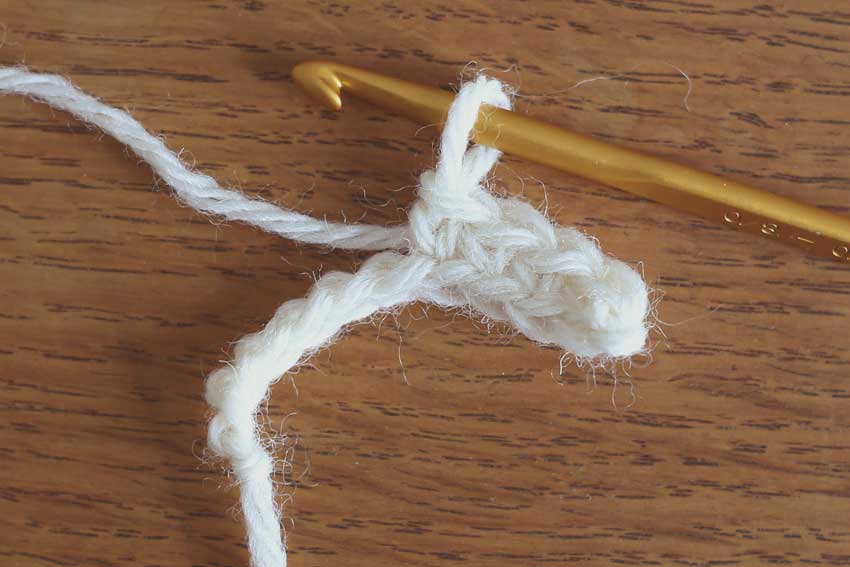
Pick up one chain on the other side and the mountain behind it
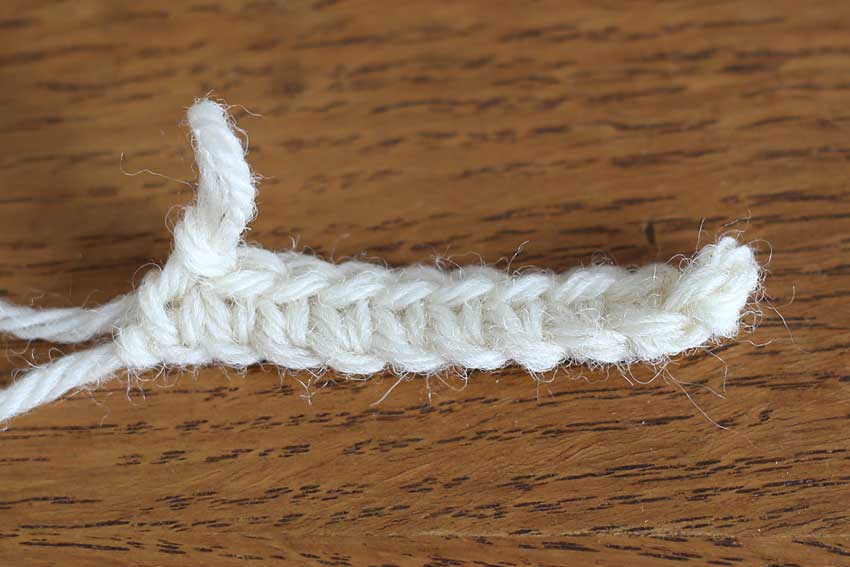
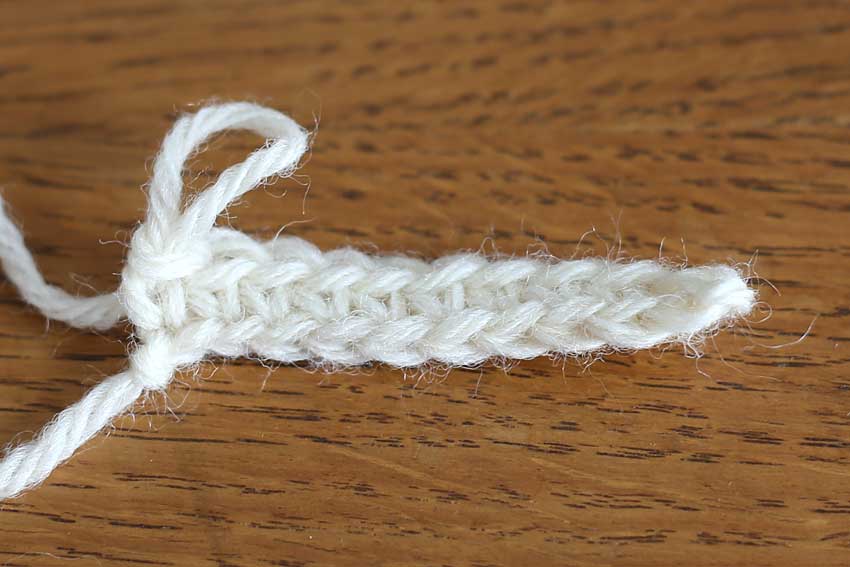
Pick up the mountain behind the chain