![かぎ針編みレシピ・無料編み図 Ronique [ロニーク]|基本の編み方から動画解説まで](https://ronique.jp/wp-content/uploads/2025/04/ronique_toplogo.webp)
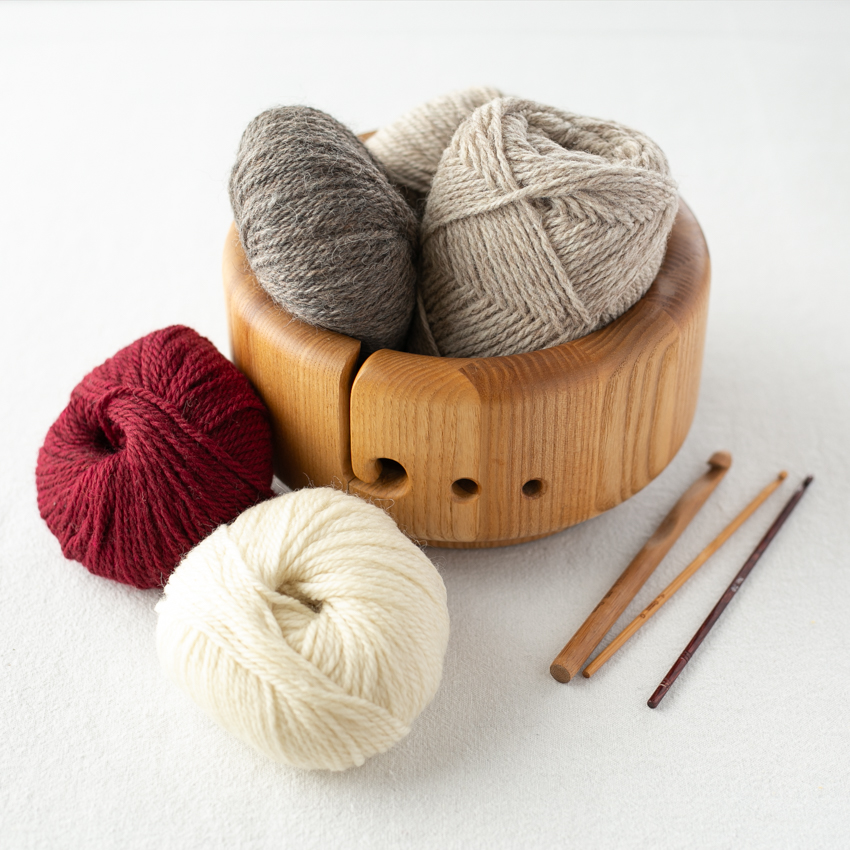
So far, we have introduced "patterned crochet" and "winter accessories" that are recommended for crochet beginners.
Next, I'd like to talk about choosing yarn, a decision you need to make when you want to crochet.
One of the joys of crocheting is deciding what yarn to use.
There are probably colors that you like, colors that suit you, and colors that you always find yourself wanting to choose.
Furthermore, I hope you will find a yarn that is easy to knit with, so that your crocheting experience will be even more enjoyable.
Here, we will tell you the points to consider when determining whether a yarn is easy to knit with, even for beginners to crocheting!
Index
Thickness and thinness of yarn
When choosing yarn, the first thing to consider is the thickness or thinness of the yarn!
This is a point that also affects the selection of works and determines the difficulty level.
If this is your first time holding a crochet hook and you're wondering how to hold the yarn, it's easier to use yarn that is a certain thickness, such as "medium weight" or "extra thick."
It feels stable when you hold it in your hand, and best of all, it's easy to see the stitches!
At first, it can be quite difficult to determine what the stitches you have just knitted look like.
In such cases, using thicker yarn makes it easier to understand and reduces stress.
In addition, the softness and tension of the yarn also affect how easy it is to knit, and this is especially noticeable with thin yarns.
Thin, loose yarn is difficult to knit with.
You may not see this type of yarn often when it comes to knitting yarn, but thin silk threads are too soft and difficult to thread with a needle, so I decided it was a bit difficult.
In contrast, thicker threads are already thick enough that you don't feel the effects of softness or tension.
On the other hand, when using thick yarn, if it is too stiff your hands will get tired while knitting, so it is important to choose a material that is not too stiff, such as wool or cotton, at first.
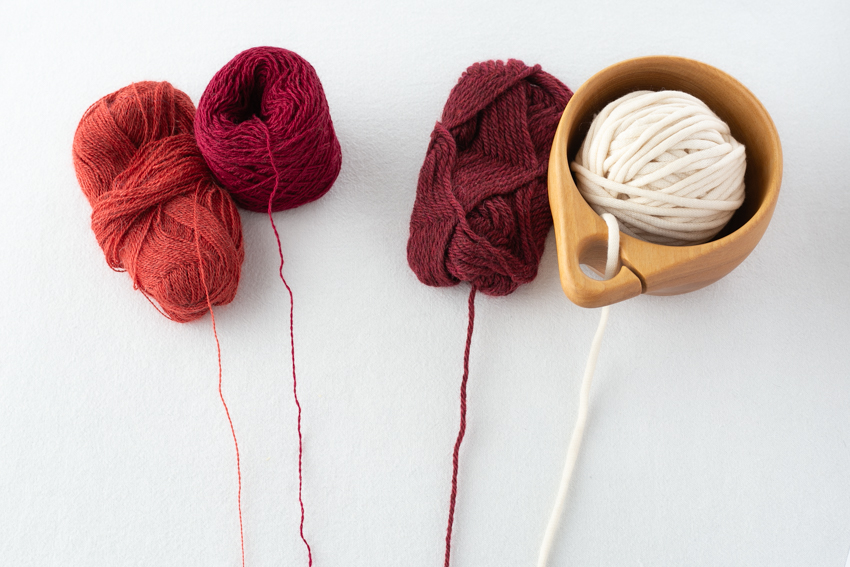
The thickness of yarn is called, in order from thinnest to thinnest, as follows: extra-fine → extra-fine → medium-fine → medium-weight → regular weight → extra-weight → extra-fine weight.
In some cases, the product name may say something like "Medium-thin XX" or "Medium-thick ◇◇◇."
In the photo above, the second from the left is thin and the third from the left is extra thick.
It seems like it would be quite hard for beginners to see the stitches when knitting in the round with fine yarn. In that sense, it would be easier to knit with medium or extra thick yarn.
For example, crocheted items made with medium weight yarn can be found in a wide range of products, including bags, hats, cowls, snoods, scarves, gloves, pouches, and amigurumi.
Extra thick yarn overlaps to some extent with medium thick yarn, and is often used for larger sized pieces such as blankets and foot covers, or for pieces where you want to add thickness to the knitted fabric.
Compared to thin threads such as medium-thick, medium-thick and extra-thick threads will result in thicker finished products.
It is not often used for small or delicate works, but there are many works that take advantage of its strength and rough texture.
I think that there are a lot of crocheted projects made with medium weight yarn, so please use this as a reference when choosing yarn that will be easy to knit with and a project to make.
Yarn color
The next thing I would mention is the color of the yarn.
For those new to crocheting, we recommend bright colors!
If you are knitting in the daytime, you may be able to use a darker color, but it is safer to start with light-colored yarn.
The brighter the colour, the easier it is to see the stitches.
You might think that if you use a darker color, uneven stitches won't be as noticeable, but I think it's best to focus on knitting first.
It's common to find yourself in the middle of knitting that the number of stitches doesn't quite add up.
At times like that, you have to count the stitches you've just knitted and figure out where you made a mistake before you can start again. Before you know it, the sun is setting...
If you want to knit with dark yarn, there is a big difference between black, navy blue, and charcoal gray, so you might want to first consider whether you can use anything other than black.
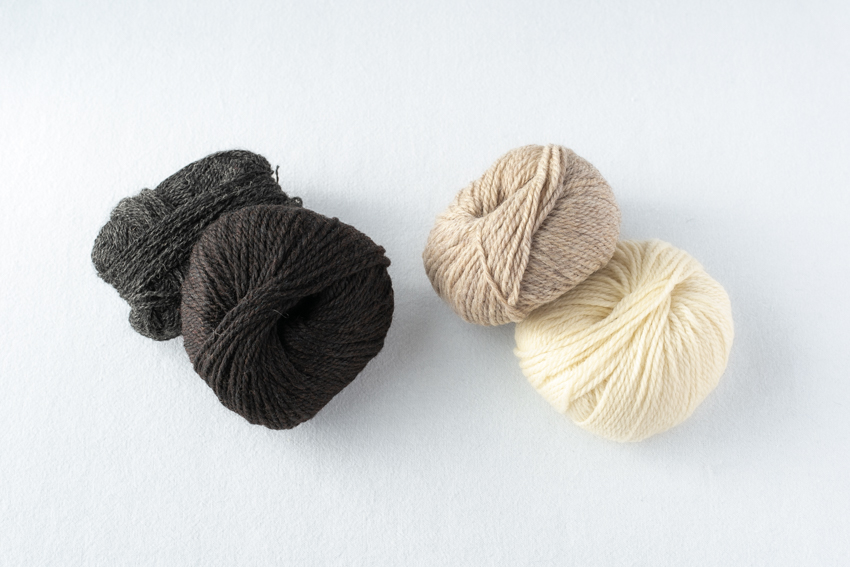
The photo above was taken during daylight hours.
If you look at the shadows in the black yarn, you can probably get a sense of it.
Color selection is a matter of preference, so there's no rule that says it has to be this way, but I think it will make a difference whether you knit in black once you've become accustomed to the stitches, or when you're not so familiar with them, so just taking this into consideration!
Shape and texture of yarn
Another point that cannot be overlooked is the shape and texture of the yarn.
It may be a little hard to convey from just these words, but the difference between brushed yarn and non-brushed yarn is actually very important.
For beginners to crocheting, we recommend straight, unbrushed yarn.
This is the most common and classic type of yarn.
Straight yarn is a yarn that has a uniform thickness, while slub yarn has varying thicknesses.
These differences are important in terms of whether the stitches are easy to see, but whether the fabric is brushed or not also has a big impact on how easy it is to undo.
When it comes to brushed yarn, there's mohair yarn, which is fluffy and cute like a stuffed animal.
It has a charm that makes you happy just by holding it in your hands.
However, the fluffy fibers tend to tangle easily, making it difficult for beginners and even experienced knitters to untangle the stitches.
The need for re-knitting is not limited to beginners.
Knowing how disappointing it can be to unravel a knitted yarn, it's much easier to start with a yarn that's easy to knit and unravel.
It is recommended to incorporate fuzzy yarns once you have become accustomed to knitting with them, and enjoy the difference in texture compared to straight yarns.
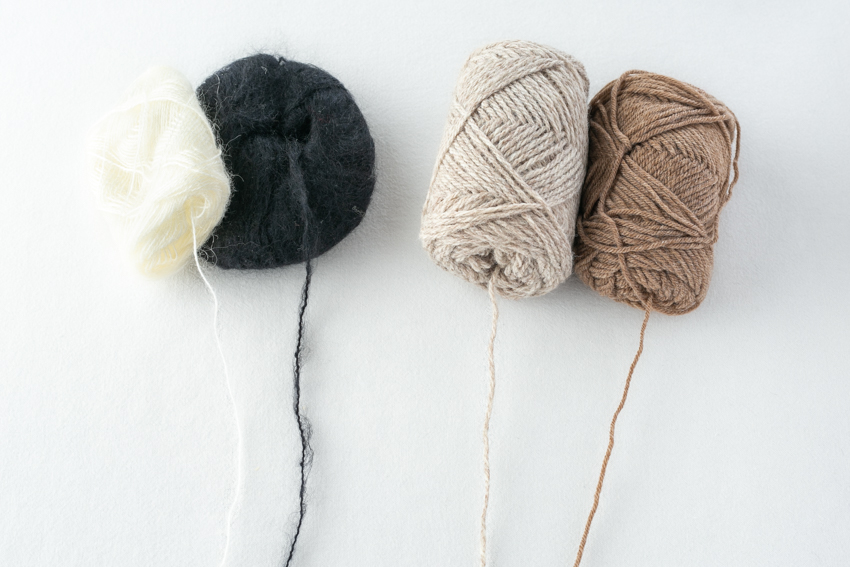
The two on the left in the image above are mohair yarns, and the two on the right are unbrushed straight yarns.
Even though it's the same mohair yarn, there are types with long, fluffy pile and types that aren't as long, but the difficulty of unraveling doesn't seem to make much difference, lol.
While I'm knitting, I can sometimes feel that the yarn is tangled, but I just carry on (of course, at that point I have no intention of untangling it).
This can sometimes require unraveling unexpectedly.
If the project only uses a small amount of yarn, it's often quicker to just start over with new yarn rather than unraveling it.
Yarns with fur or unusual materials like fancy yarns can get caught when you try to untie them, but there are also yarns that slide easily, so it depends on the case.
With fancy yarns, you should be aware that the stitches can be difficult to see.
You buy something because you think it's cute, but then you find that the stitches are harder to see than you expected...and you have to knit by guesswork.
In such cases, you may want to use it just for edge knitting, or combine it with straight yarn.
twisting yarn
It is related to the material of the yarn, but another point to consider is the "twist of the yarn."
Twisting yarn is the process of twisting one or more strands of fiber together to make a single strong thread.
If the yarn is tightly twisted, it is less likely to break and is easy to crochet, making it recommended for beginners to crochet.
The tightly twisted yarn is plump, three-dimensional, and gives a cute impression (although it is abstract).
Materials such as wool are tangled to maintain their twist, making them less likely to split.
In contrast, linen yarn is a material that is difficult to twist tightly like wool, as the fibers are hard and do not stretch easily.
Also, since the fibers do not interlock easily, some threads are prone to splitting (even if the material is the same, the strength of the twist will vary depending on the thread).
The two on the left in the image below are both made of linen (ramie and linen), the one on the far right is made of cotton, and the second from the right is made of cotton and acrylic.
The two on the right are tightly twisted.
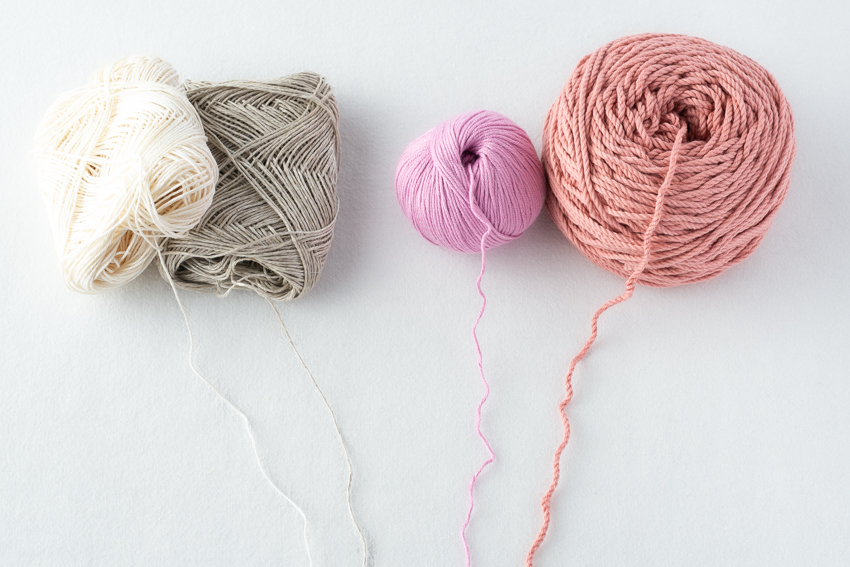
I'll also post a larger image.
Can you get a sense of the twist in the image below?
The two yarns on the right are tightly wound, while the two on the left are loosely twisted and have a slightly flatter appearance.
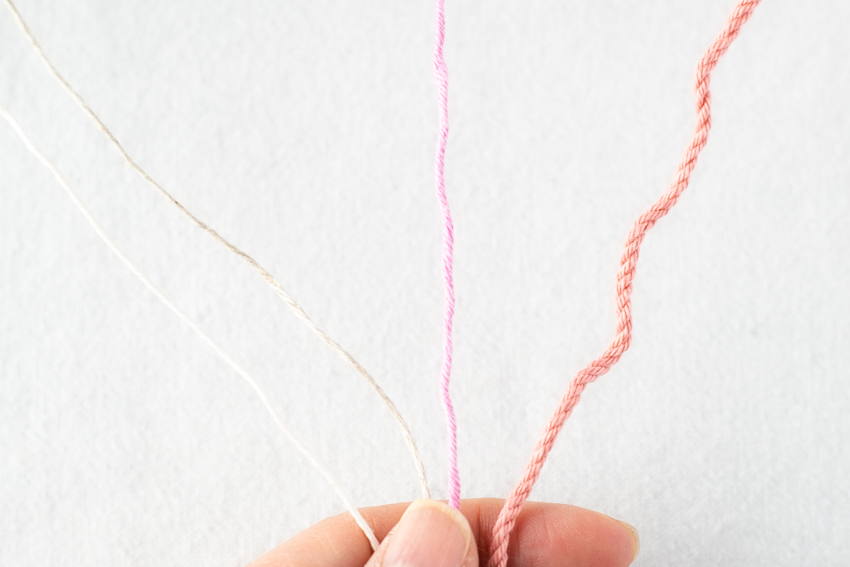
The tightly twisted cotton material is plump, while the loosely twisted linen material has a crisp, shiny feel and is cool.
Both have their own merits, and linen has an irresistible appeal, especially during the summer season.
Here, we want to compare which is easier for beginners to knit, so the stronger twisted cotton wins.
Thick yarn is easy to knit with and the stitches are easy to see, so I honestly recommend it.
By the way, there are many types of linen thread that are less likely to split, so just being a little more careful when choosing can make a big difference in how easy it is to knit.
One of the joys of knitting is being able to feel the differences between materials while you're knitting and after you've finished, so once you get the hang of it, be sure to try out different yarns!
Availability
This point of "ease of acquisition" may not be a concern when you are choosing yarn, but it can have a gradual effect later on.
I thought I bought the exact amount, but when I started knitting, I realized I didn't have enough yarn...!
Suddenly, I had the idea to untie this and knit something different, but I didn't have enough yarn...!
This happens surprisingly often when knitting.
When you're a beginner, the experience of completing a work is extremely valuable.
However, people often don't think about buying more yarn than they need, and find it difficult to estimate how much they will need (although this is true even for experts).
Even if you have to stop knitting halfway through, you want to finish it and feel a sense of accomplishment since you have resumed it. That is why it is extremely important to be able to purchase more yarn when you run out.
With Japanese yarn, even if the production lot (the smallest unit of product produced collectively under the same conditions) is different, the difference in color is often not that great (almost imperceptible), so knowing that the same yarn is produced and available at any time is a great source of peace of mind when knitting.
Depending on the yarn, it may be discontinued or only certain colors may be discontinued, but there's nothing we can do about it as we can't predict this.
If you are using a standard color of standard yarn, this possibility should be relatively low, so we hope that this will be helpful for beginners when choosing yarn.
Summary: 5 points about yarns recommended for beginners
Let's review five points to consider when choosing yarn for beginners to crocheting.
〇 Thickness/thinness of yarn: medium thickness, extra thick
〇Yarn color: Light color
〇 Yarn shape and texture: Straight yarn with no nap
〇 Yarn twist: tightly twisted
Ease of acquisition: Easy to obtain yarn, and even more reliable if it's a standard item
Based on my experience with crocheting, this is the kind of yarn I would recommend for beginners.
There are so many wonderful yarns out there, and choosing one can be really exciting.
Even if you are a beginner at crocheting, we encourage you to enjoy knitting with a variety of yarns!

