
Index
Crochet winter accessories inspired by knitting
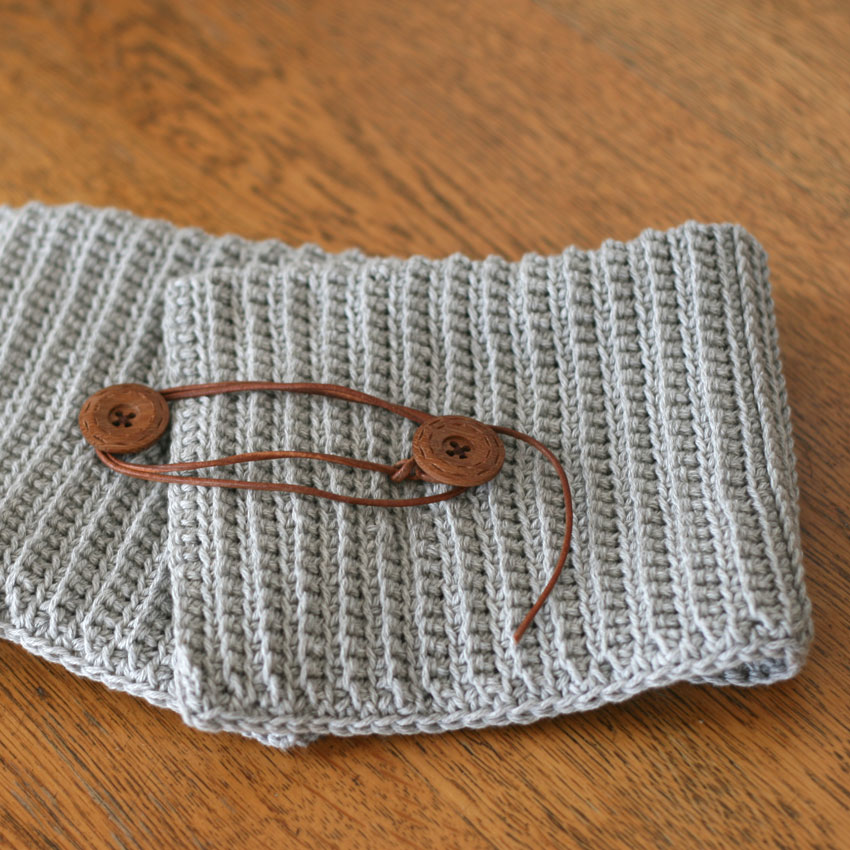
A lovely neck warmer I saw in a book a long time ago.
It was a knitted piece, and I remember it was knitted using a technique called "British ribbing."
As someone who only knows 1x1 rib and 2x2 rib stitches in knitting and prefers crochet, I've been curious about it but have missed opportunities to try it.
With the image of that beautiful knitted fabric still lingering in the back of my mind... and as the wind turned colder and the weather became chilly, I felt like knitting some small accessories to keep my neck warm.
I wanted a soft, fluffy neck warmer that felt nice against the skin.
So, inspired by the rib stitch used in knitting, I tried making a simple neck warmer using a modified version of the rib stitch.
My personal tip is to use a thick crochet hook for the yarn and knit loosely.
I feel like it somehow becomes softer and warmer than when crocheted with a crochet hook that is just the right size for the yarn.
The knitted fabric is folded and doubled, making it very warm.
Since this is an item for wearing around the neck, I thought it would be best to use yarn that feels nice to the touch, so I knitted it using organic cotton yarn that doesn't seem to be itchy.
It would also look lovely knitted with wool yarn.
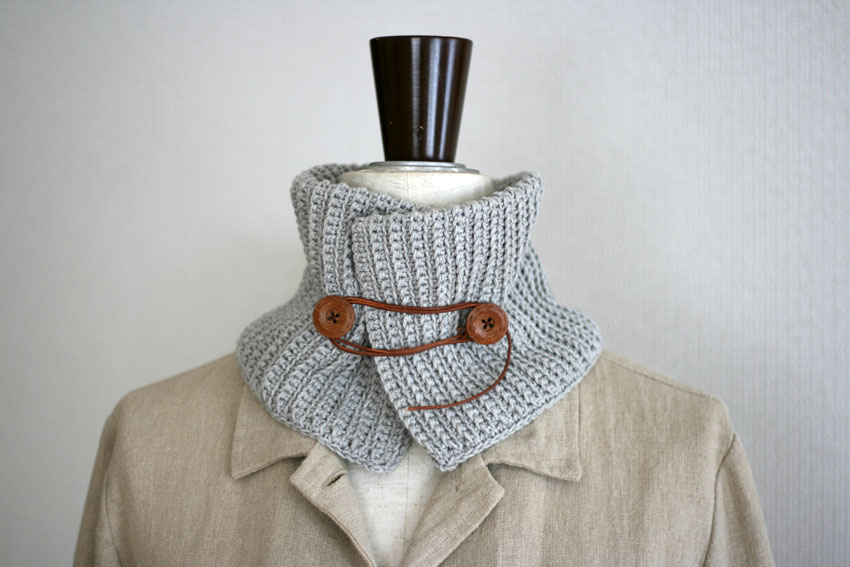
Preparation and materials needed for "Ribbed Knit Neck Warmer"
Yarn and Crochet Hook Size
Medium-weight organic cotton (gray)
3.5 mm (JP 6/0)
Finished size
53cm x 14cm (when unfolded)
Detailed instructions and steps for making a "wavy knit neck warmer"
① Start by casting on the chain and knitting 56 stitches.
② Knit the fabric using an adapted version of ribbing.
Below,Ribbed braid arrangement with explanation and imagesPlease refer to the detailed information written in.
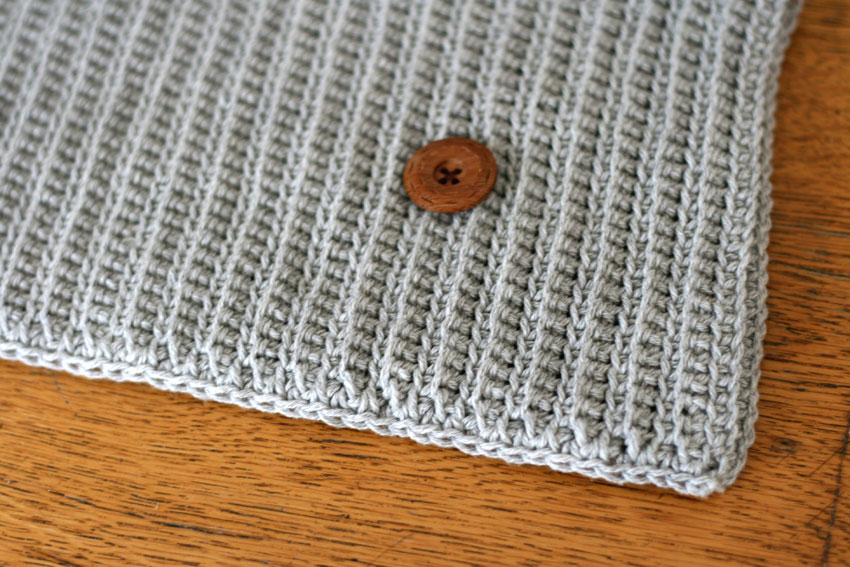
For each row of garter stitch, you will pick up only one stitch on the other side of the head of the previous row's knit stitch and knit a new stitch.
Here, for odd-numbered rows (when knitting the front side in rows 1, 3, and 5), scoop up one strand from the far side, and for even-numbered rows (when knitting the back side in rows 2, 4, and 6), scoop up one strand from the front and knit.
The one strand that was not scooped remains visible on the front side, making the pattern appear clearer.
Using this method, knit back and forth until you reach row 97.
③Once you have knitted up to the 97th row, fold the knitted fabric in half lengthwise and join them together, then overlap the knitted fabric on the bottom of the open side and insert the needle through the two pieces of knitted fabric, and crochet them together.
Leave both sides open and unstitched.
4. While checking the balance, attach the buttons and fasten the leather string to one of the buttons to complete the garment.
At this point, try wrapping it around your neck, find the position that feels right when fastened, and then attach the button.
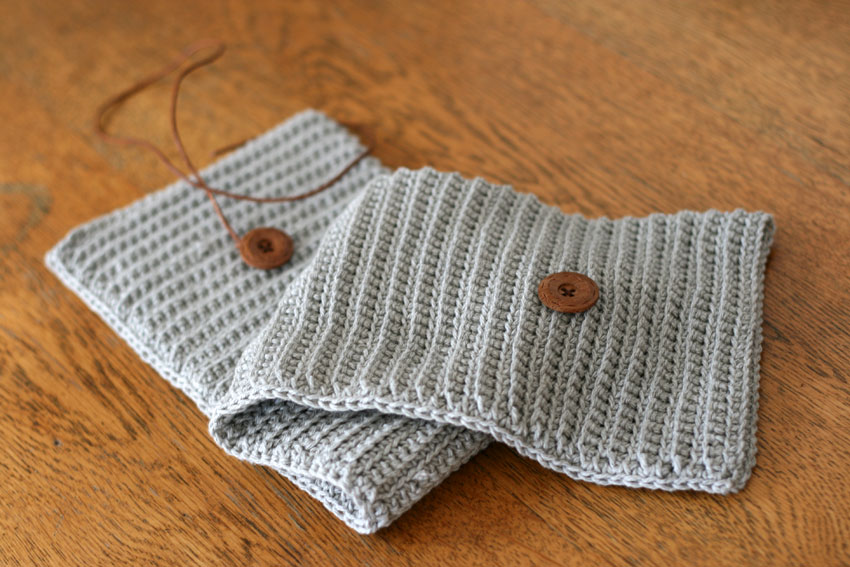
Photo-illustrated explanation
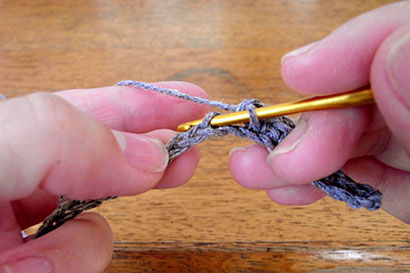
① Start knitting by casting on the chain. In the first row, pick up just one strand on the other side of the cast-on chain and make a straight stitch.
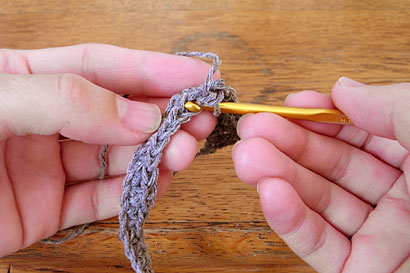
②For the second row, pick up only one stitch in front of the previous row and knit.
From this point onwards, for even rows (when knitting the back side of the knitted fabric), knit only one strand at the front in the same way.
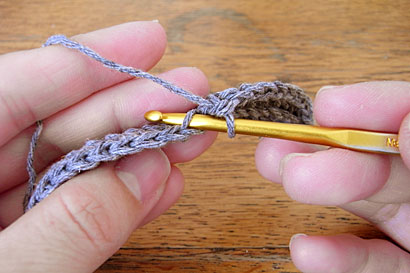
③For the third row, pick up just one stitch on the other side of the previous row and knit.
From this point onwards, for odd-numbered rows (when knitting the front side of the fabric), knit in the same way, scooping up only one strand on the far side.
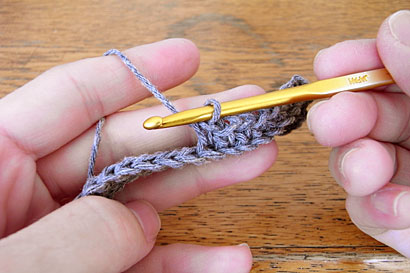
④The photo shows the third row in the middle of being knitted.
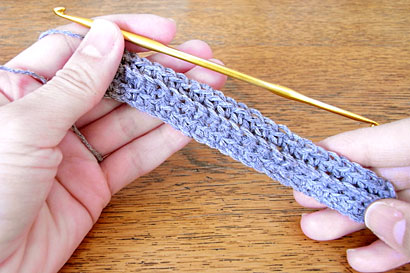
⑤After knitting about three rows, you will gradually begin to see the pattern of the knitted fabric.
Then just repeat this process.
Top 3 Most Popular Patterns in Accessories & Wear | Ronique Store

[No.1] Cap in Style
This piece attracted attention upon its release. It can be made using basic crochet techniques.
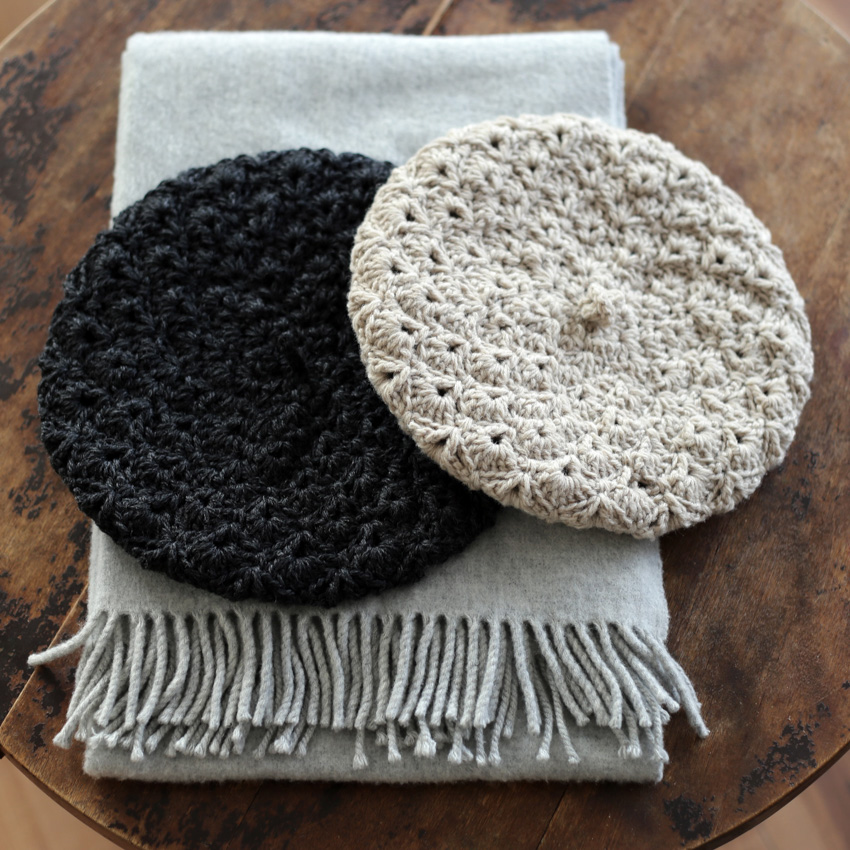
[No.2] Let's Beret!
This beret, made with a pine weave pattern, has been a long-time favorite since its release.

[No.3] Shawl and Throw
This pattern allows you to knit two types of items: a triangular shawl and a square lap blanket.

