![かぎ針編みレシピ・無料編み図 Ronique [ロニーク]|基本の編み方から動画解説まで](https://ronique.jp/wp-content/uploads/2025/04/ronique_toplogo.webp)
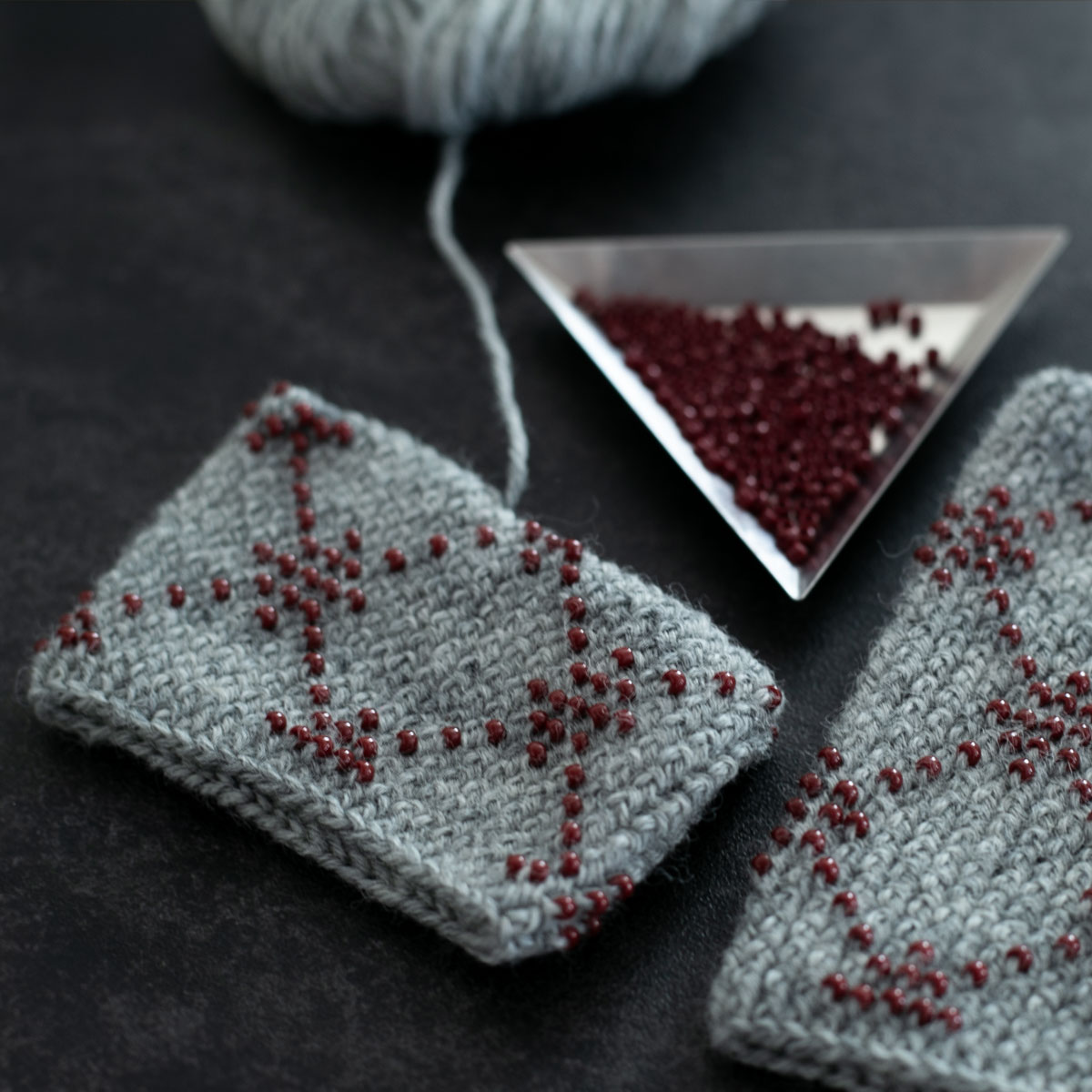
A single bead is dropped into the crochet stitch.
This not only allows for the addition of decorations, but also allows for the creation of patterns using "dots" of beads on the "surface" of the crocheted fabric.
At first glance, bead crochet may seem difficult, but in essence it is extremely rule-based.
By maintaining a brisk tempo, a neat beauty emerges.
Adding the element of beads gives the finished piece an unpredictable, unknown look.
In this article, we will analyze bead crochet, which is an extension of crochet, not only as a technique but also as a "dialogue with materials."
Index
The history of beads: from "art" to "craft"
Beads are a familiar craft material, but they have actually been deeply connected to cultures and histories around the world.
Studies and exhibitions from around the world demonstrate that beads have been used not only as ornaments but also as currency and social and religious symbolism.
Within these cultural roles, the color of the beads also had important meaning.
In ancient Egypt, blue symbolized rebirth and heaven, and in African and North American cultures, color combinations were said to represent status, faith, and turning points in life.
Even in medieval Europe, certain colors were associated with nobility and religious symbolism.
When you learn about this background, the beads you use every day may seem a little more special.
In this article, we will use multiple sources related to the history of glass crafts and beads to trace the path of how beads have spread into the craft materials we use today.
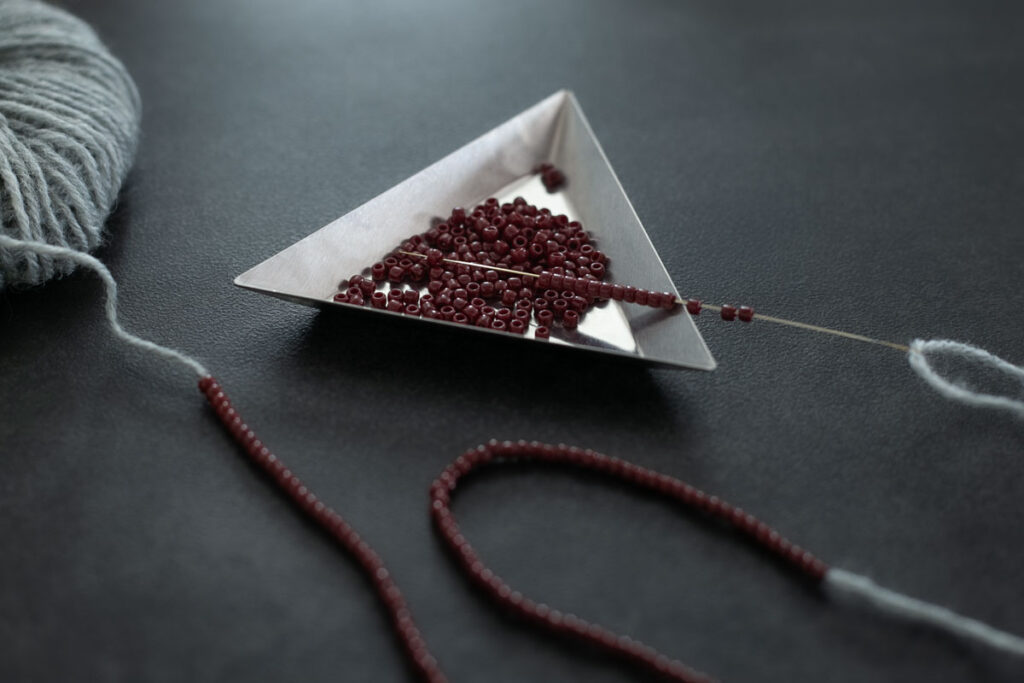
Beads began as works of art
- The Age of Venetian Beads
In medieval Europe, beads were not a craft material for the common people, but a rare craft item for the privileged class.
At the top of this hierarchy was the Republic of Venice (an independent state centered in present-day Venice, Italy).
Venice flourished as a center of glass art in medieval Europe.
In the 13th century, Venice protected glass art as a national industry.
In 1291, in order to prevent fires and the loss of technology, glass workshops in Venice were concentrated on the island of Murano.
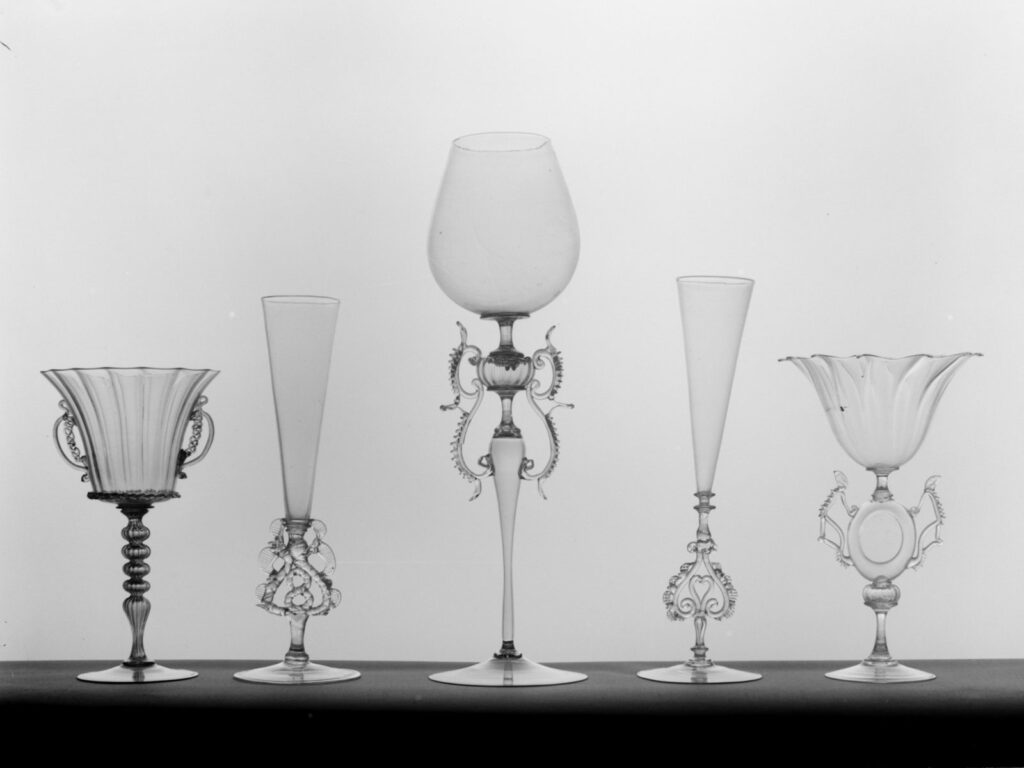
(Wineglass, Italian, Venice, Murano, 1860–75, The Metropolitan Museum of Art, Public Domain)
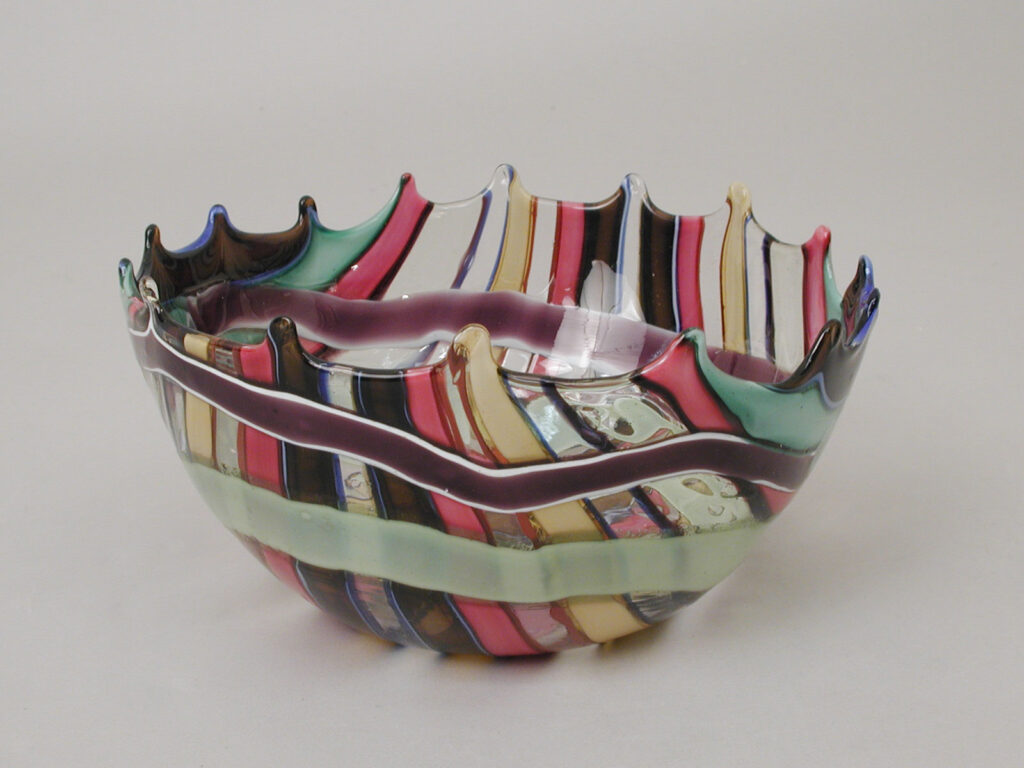
(Roman-style bowl with clear and multicolored band decoration, Italian, Venice, Murano, ca. 1870, The Metropolitan Museum of Art, Public Domain)
This established Murano as one of the world's leading centers for glass technology.
Murano glassmakers enjoyed special legal protection and a high social status.
It was here that
- Cristallo (crystal clear glass)
- Millefiori (a decorative technique in which layers of colored glass create cross-sections of floral patterns)
- Lampwork beads (small decorative beads made by wrapping molten glass around them)
It is a highly artistic technique.
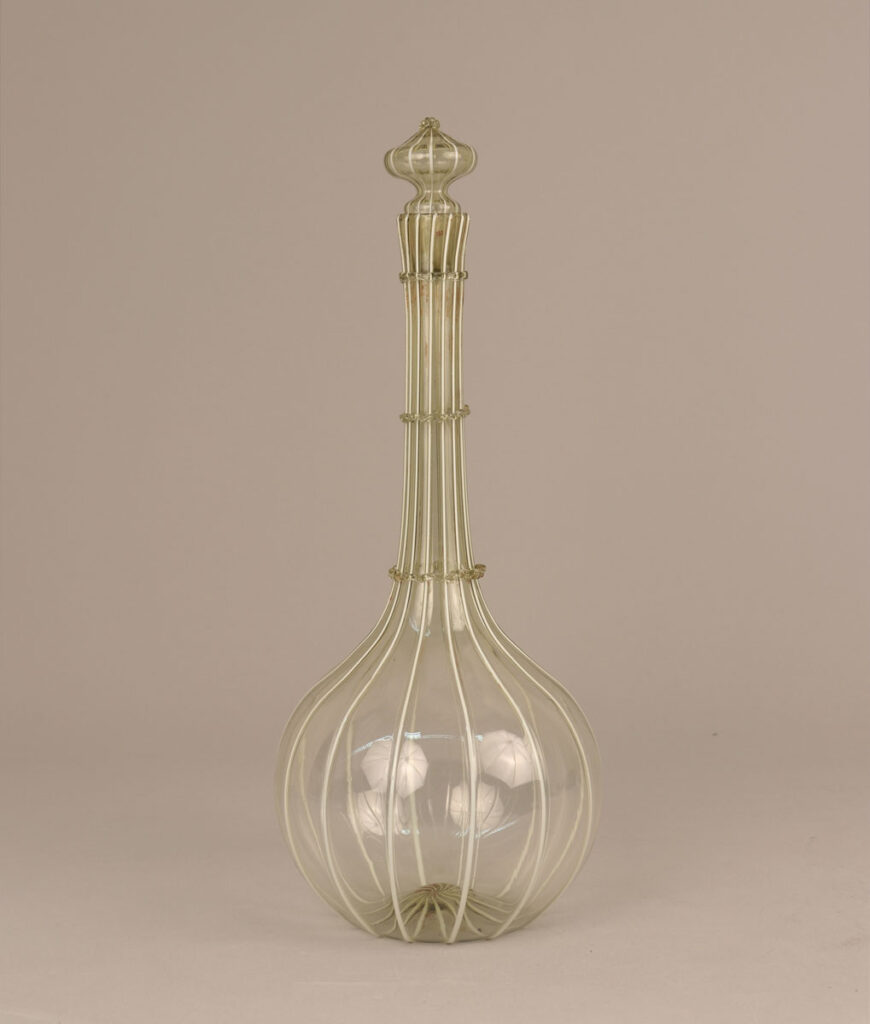
(Bottle with stopper, Italian, Venice, Murano, ca. 1860–80, The Metropolitan Museum of Art, Public Domain)
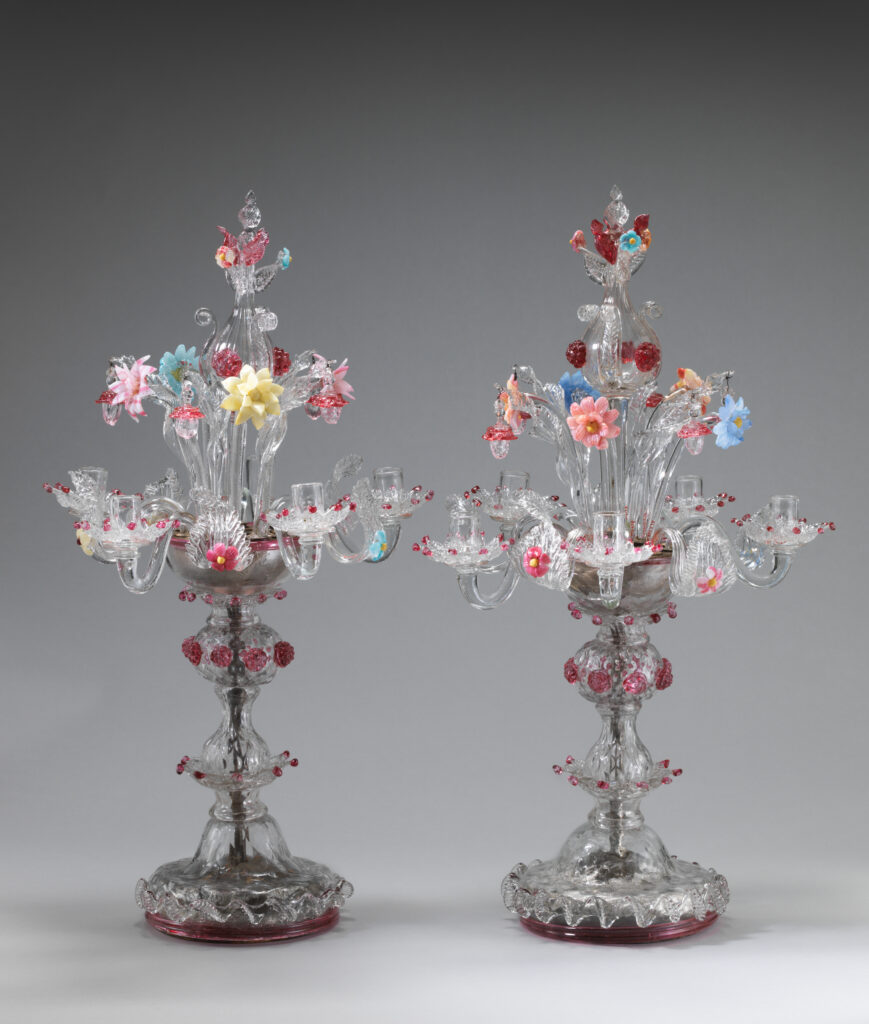
(Candelabrum (one of a pair), Italian, Venice, Murano, 18th century, The Metropolitan Museum of Art, Public Domain)
Glass produced in Murano was also widely used to decorate aristocratic mansions and churches.
It developed into a craft that was deeply connected to court culture, and from this advanced glass craft, beads for decorative purposes were also produced.
Beads were not just decorative; they were used as ornaments for royalty and nobility, religious decorations, and international trade goods.
During the Renaissance, Venetian glass beads became highly valued commodities on trade routes.
Beads were transported along the Silk Road to Asia, across the Sahara Desert to Africa, and even to the Americas by European explorers and traders.
In Africa in particular, beads were used as currency, symbols of status and wealth, and were also exchanged for gold and ivory.
In this way, beads spread throughout the world as both decorative items and trading goods with exchange value.
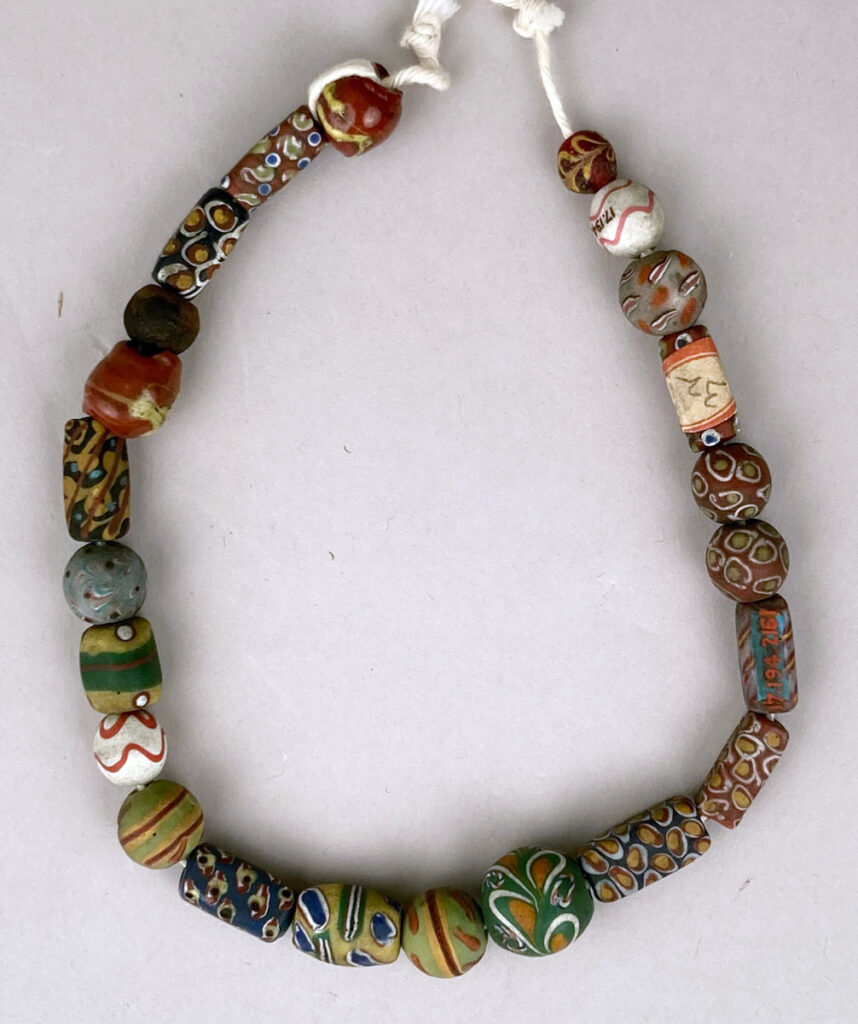
(Beads, Glass, Italian, Venice (Murano), 19th century, The Metropolitan Museum of Art, Public Domain)
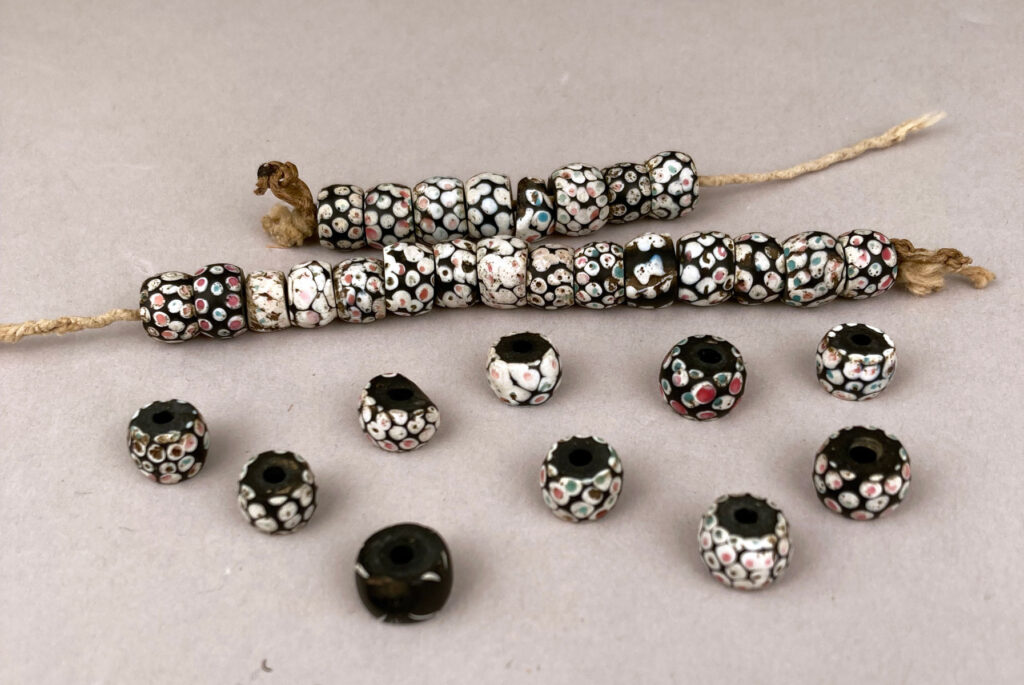
(Beads, 33, Italian, Venice (Murano), 18th century (?), The Metropolitan Museum of Art, Public Domain)
Beads have evolved into a craft material
- Industrial transformation born from Bohemia
The region of Bohemia (now the western part of the Czech Republic) brought about a major change in bead culture.
From the late Middle Ages through the early modern period, glassmaking developed rapidly in Bohemia.
The region is rich in forest resources, which ensured a stable supply of fuel for glass kilns. In addition, alkaline raw materials such as quartz, lime, and potash were readily available, creating an environment ideal for glass production.
Unlike Venice, where the state strictly controlled industry, Bohemia saw technological innovation advance through competition between workshops scattered across the country.
This free production environment will accelerate efficiency and mass production.
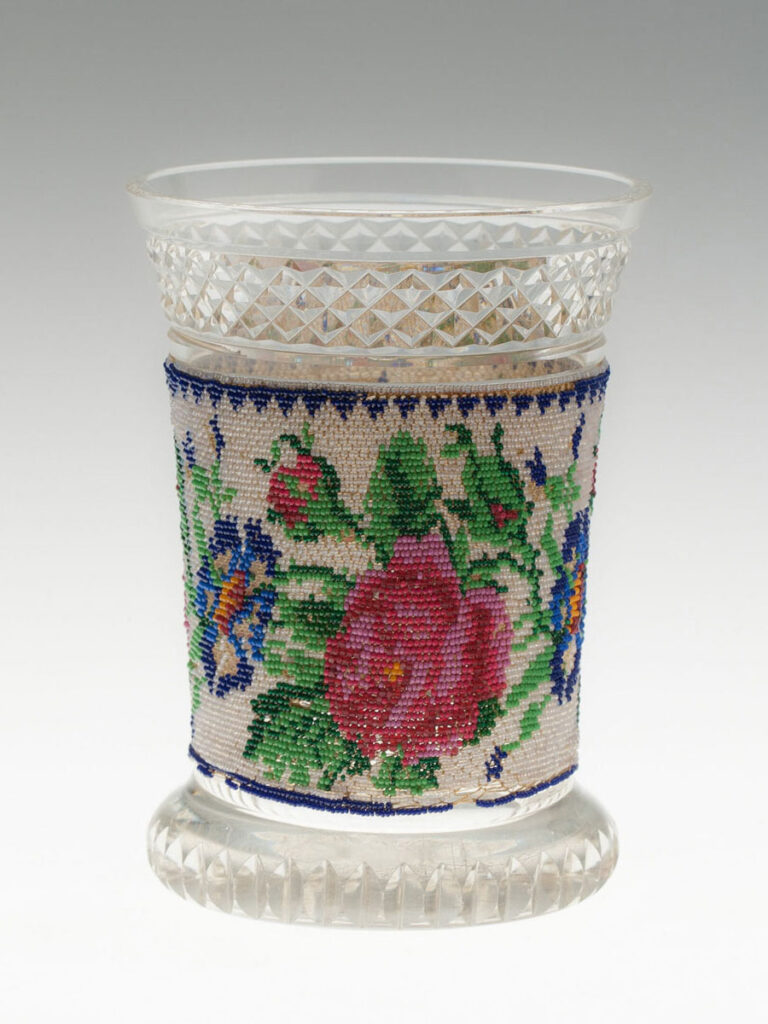
(Beaker with Beaded Band, Bohemia, ca. 1820–1840, The Art Institute of Chicago, Public Domain)
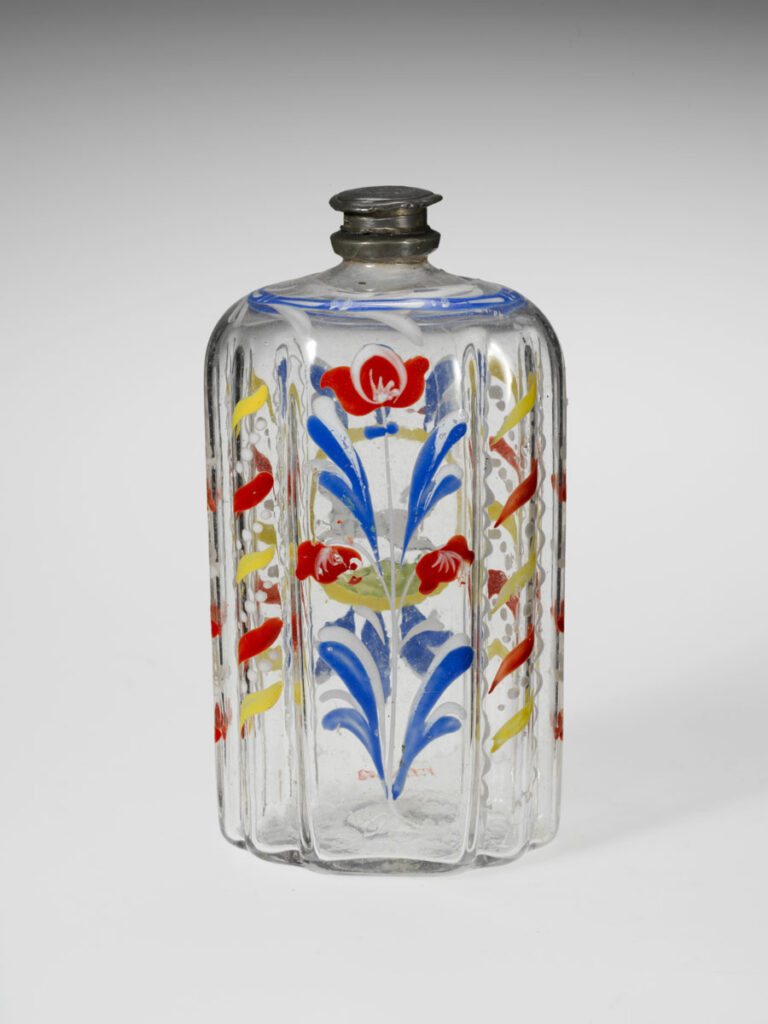
(Bottle, Made in Bohemia, Czech Republic, 1763–79, The Metropolitan Museum of Art, Public Domain)
In the 18th and 19th centuries, the Bohemian glass industry introduced mechanized production, allowing uniformly sized beads to be mass-produced, and factory production expanded.
As a result, we have established a system that allows us to supply large quantities of glass beads of stable quality at relatively low prices.
While Venetian beads were luxury crafts for royalty and aristocracy and for religious decoration, Bohemian beads came to be widely used in general handicrafts and clothing decoration.
Beads have evolved from being jewelry for the special classes to a material that is accessible to people who use their hands to create decorations.
From the late 19th century to the early 20th century, designers around the world began incorporating Bohemian beads into their haute couture creations, and glass beads became an important material in the global fashion industry.
- The spread of seed beads as a global ornament
The mass production techniques developed in Bohemia also led to the spread of tiny glass beads known as "seed beads."
These tiny beads allowed for a variety of techniques to be used to create intricate patterns, including bead weaving, loom decoration, and embroidery.
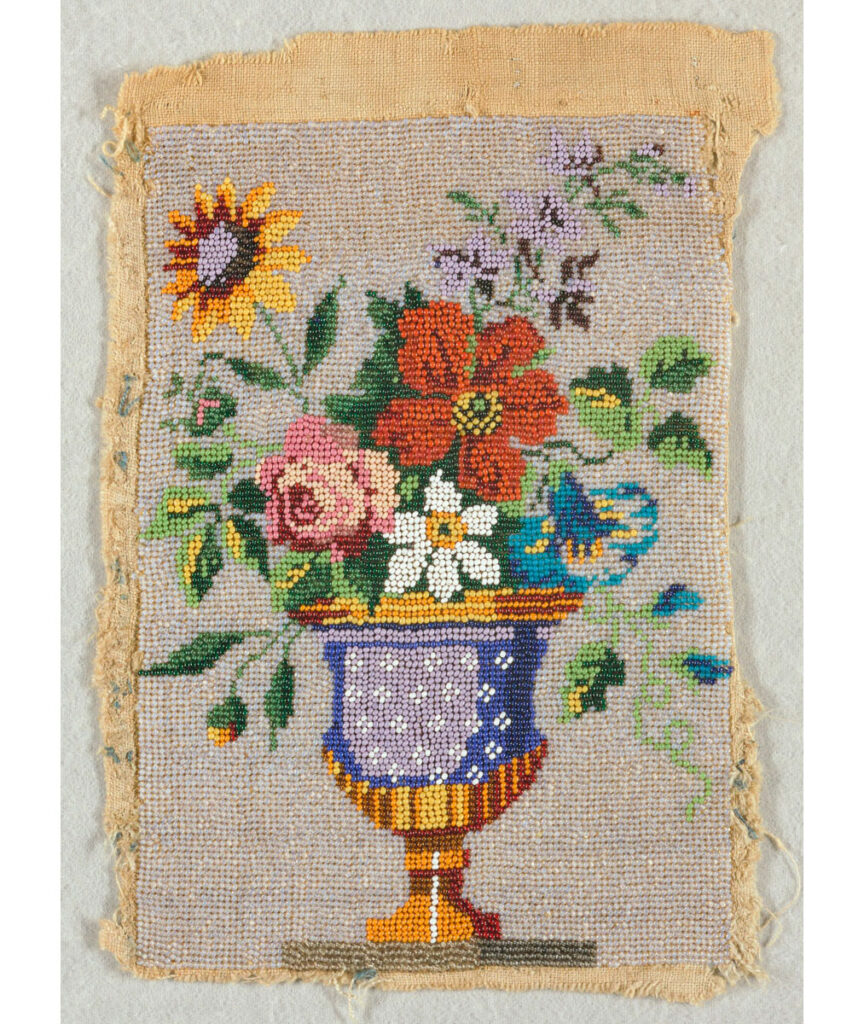
(Beadwork Picture, France, early 19th century, Public Domain)
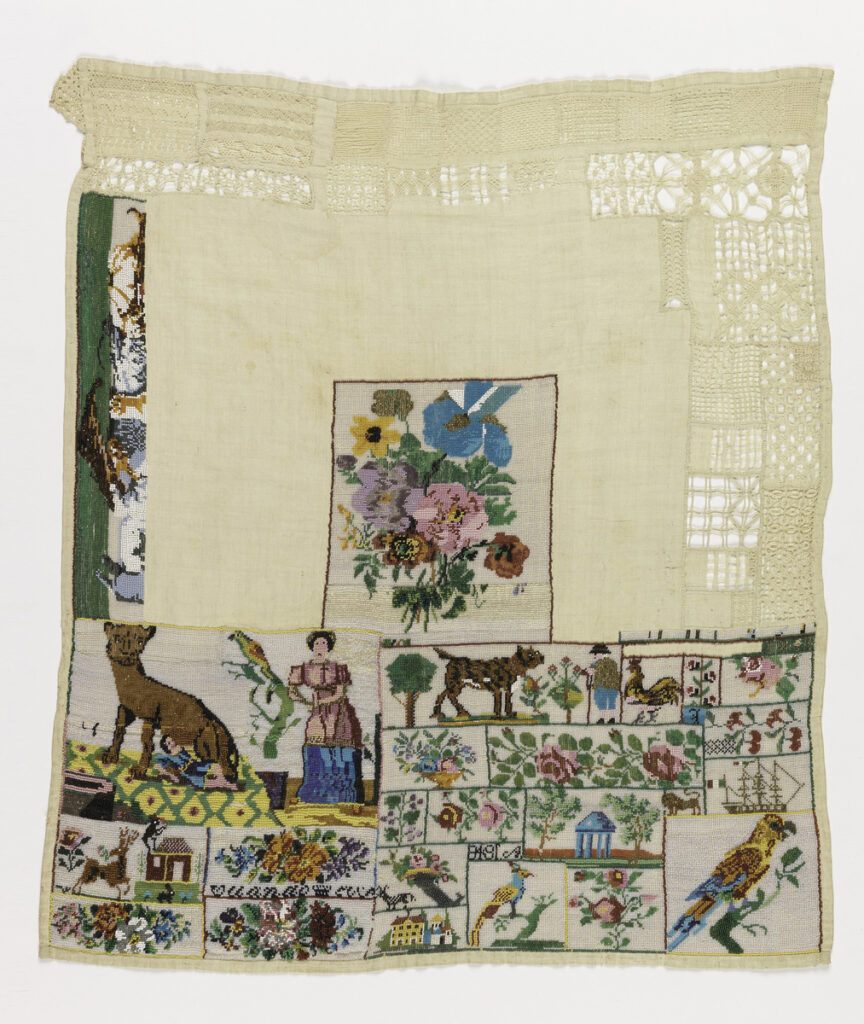
(Sampler, Mexico, 1848–49, Public Domain)
These techniques were developed independently in various parts of the world, and seed beads came to be widely used as a material that allowed for delicate decoration.
Each culture adopted beading techniques to suit their own aesthetic sense and symbolic expression, creating a diverse decorative culture.
Subsequent advances in materials and processing techniques allowed decorations using seed beads to be more complex and precise, leading to the development of modern bead crafts.
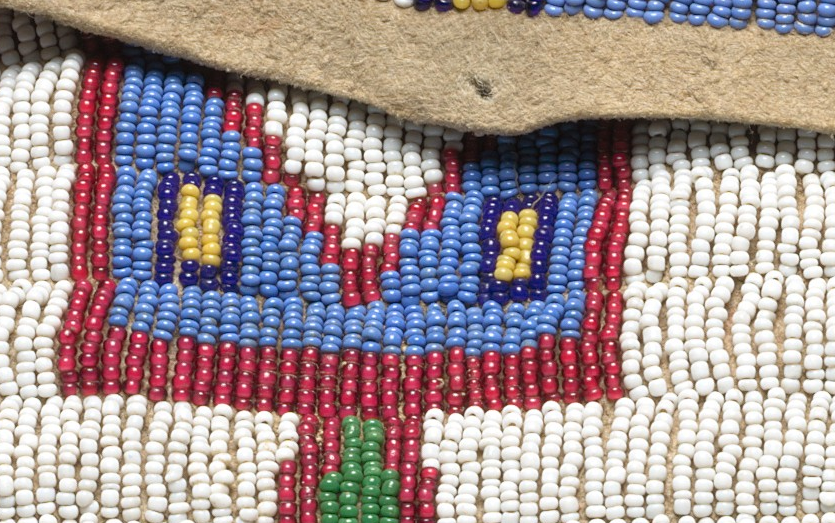
(Glass beadwork, Lakota storage bag, late 19th century, Public Domain)
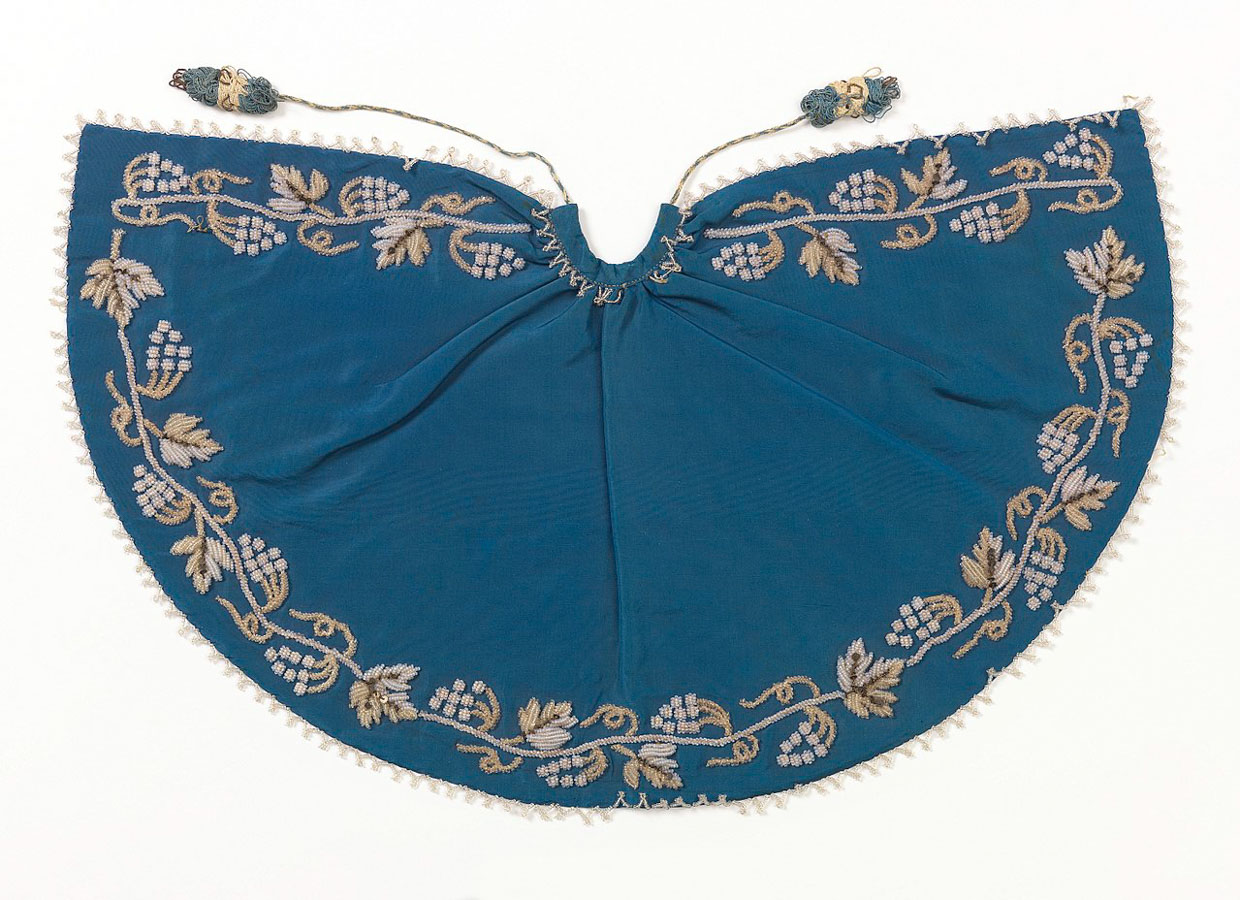
(Cape for an Ecclesiastical Figurine, France, mid‑19th century, Public Domain)
Decorations made from thread and beads
In 19th century Europe, needlework was not only a domestic art, but also a cultural symbol of women's culture and refined elegance.
In this era, decorative ropes and accessories made from bead crochet began to be widely produced.
Using the bead crochet technique, which requires not only artistic sensibility but also planning to accurately construct the pattern, women of the time made wallets, necklaces, chatelaine fobs, and other items.※We have created exquisite accessories such as:
※A decorative tool set with a chain for carrying personal items such as keys, scissors, and watches, hanging from a belt or waist.
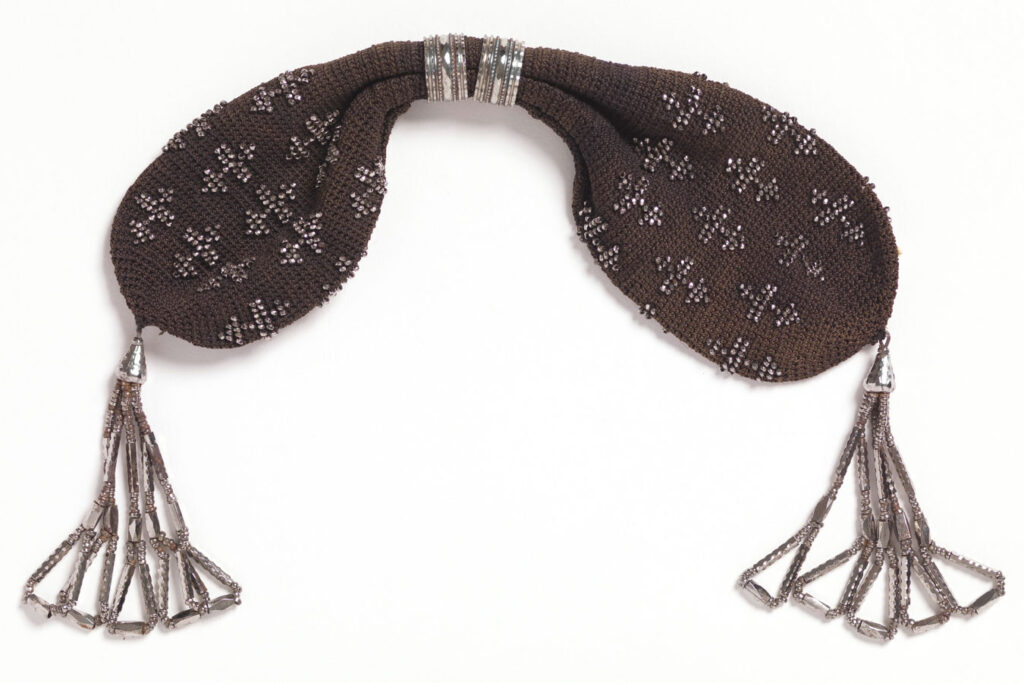
(Miser's Purse, France, 19th century, Public Domain)
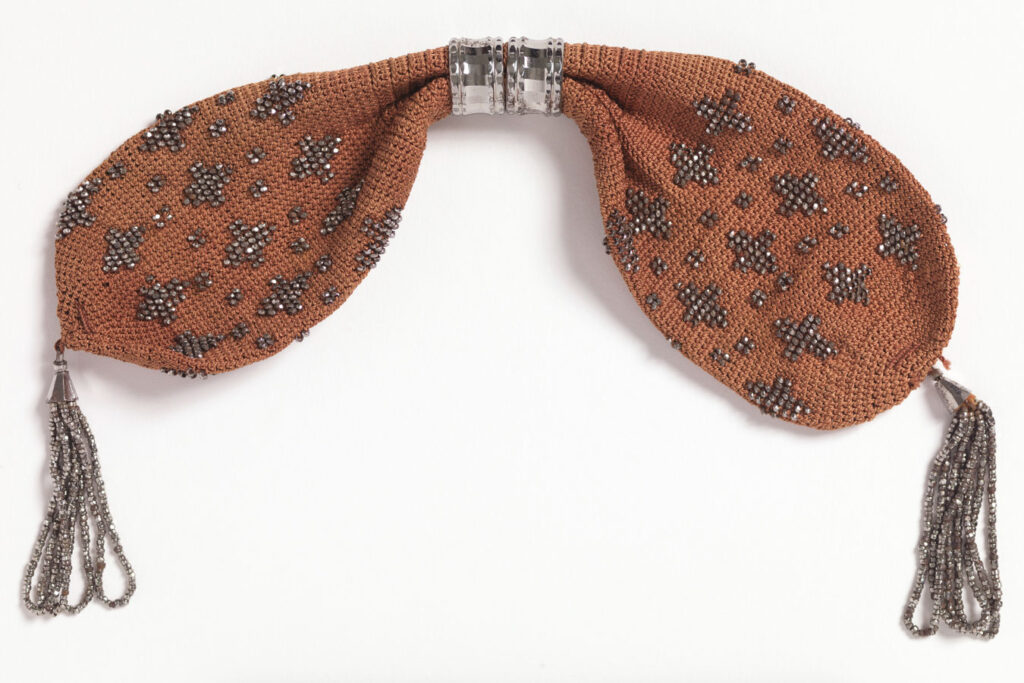
(Miser's Purse, France, 19th century, Public Domain)
Bead crochet involves threading beads onto thread or thin cord and then creating patterns as you weave them.
The arrangement of the beads must be planned before crochet begins, and the combination of thread and beads creates a three-dimensional decorative expression.
This technique allows for a wide variety of precise designs, from geometric patterns to flowing decorative patterns.
Bead crochet was widely used not only for accessories such as necklaces and bracelets, but also for handbags, belts, and clothing decorations.
Even after its popularity waned in the early 20th century, the bead crochet technique was used to decorate traditional costumes in Eastern Europe, particularly in Hungary, Ukraine and the Baltic states, and practical knowledge of it has been preserved through generations.
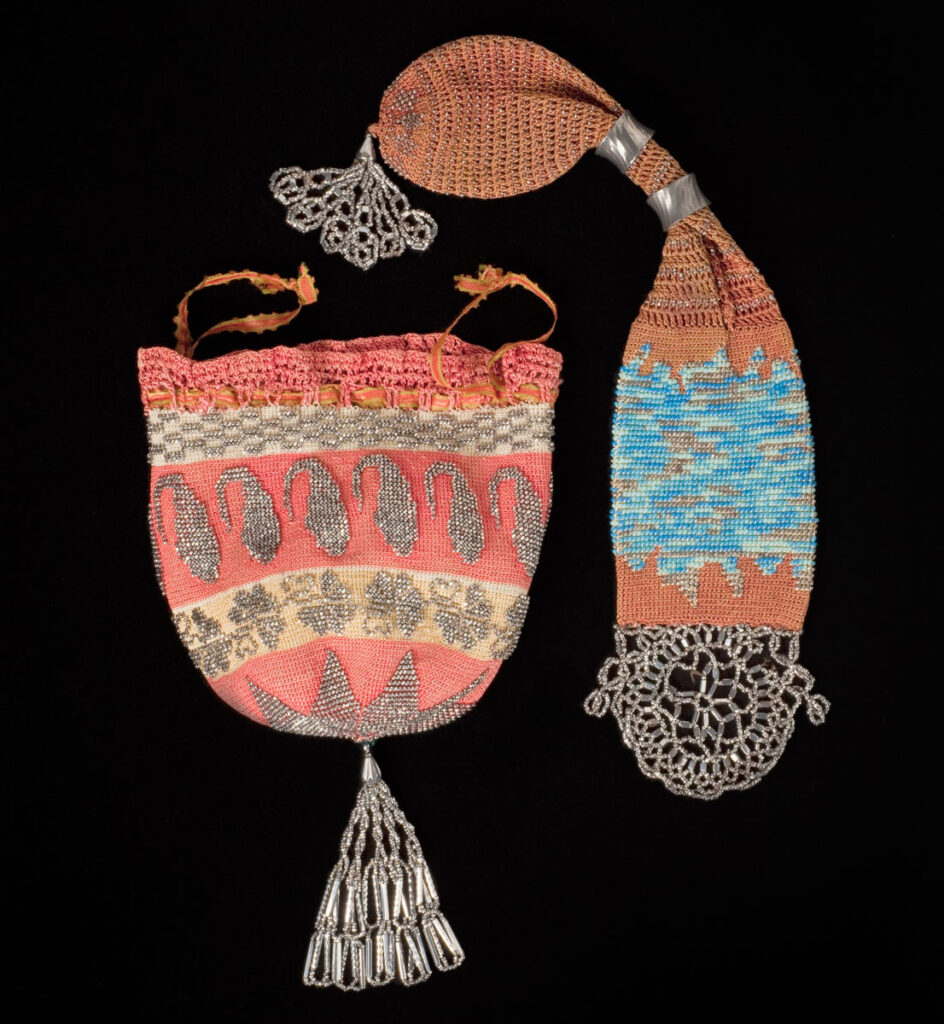
(Woman's bag (reticule) and stocking purse, Europe, ca. 1830-1850, Public Domain)
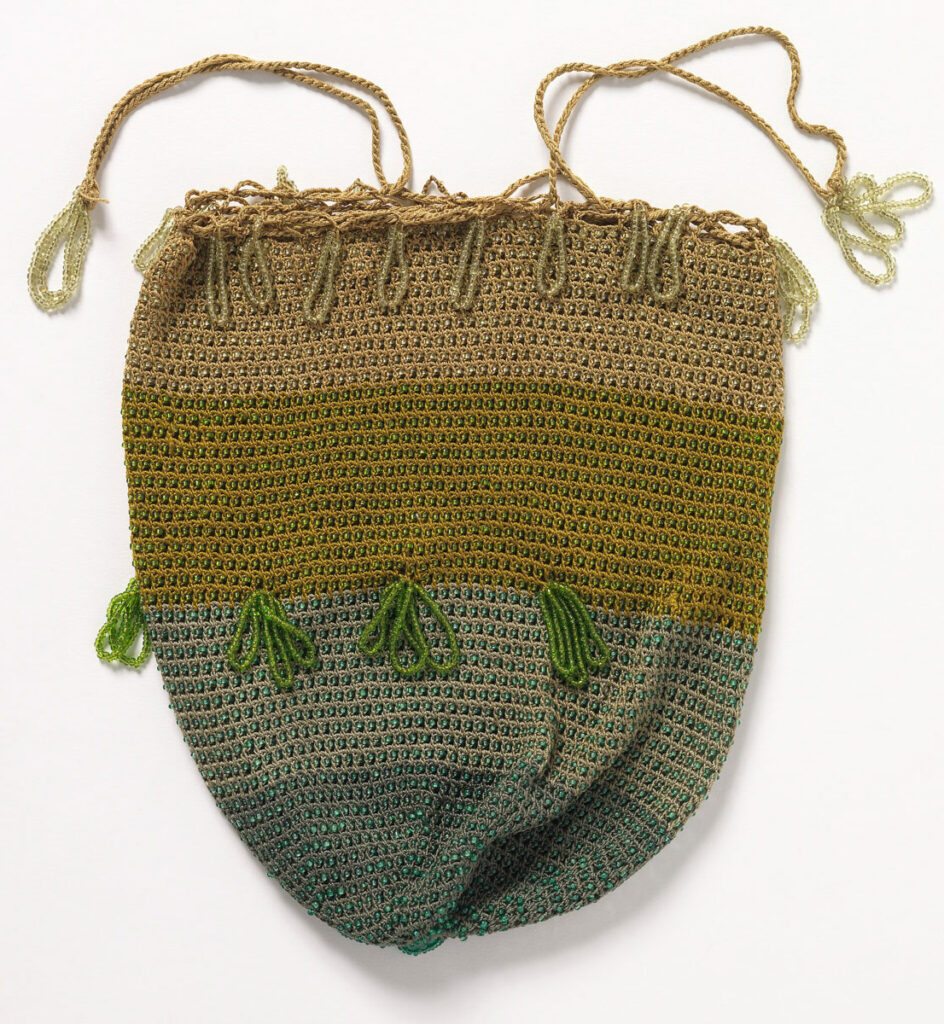
(Bag, mid-19th century, USA, Public Domain)
Bead crochet to expand your crochet expression
These traditional techniques have been passed down over a long period of time and are still alive in modern craft culture.
Today, bead crochet is not just a special decorative technique, but has become a popular craft enjoyed all over the world.
One of the great attractions of this design is that it simultaneously expresses the softness of the thread and the brilliance of the beads.
By weaving particles of light into simple crocheted fabric, the possibilities for crochet can be expanded even further.
And bead crochet is not just a technique for adding decoration;
How to arrange the beads
What crocheted fabric to combine with
It is also a craft that allows you to enjoy the design itself.
This article introduces the world of bead crochet to those who enjoy crocheting.
Let's explore the charm of bead crochet, a world that lies just beyond crochet.
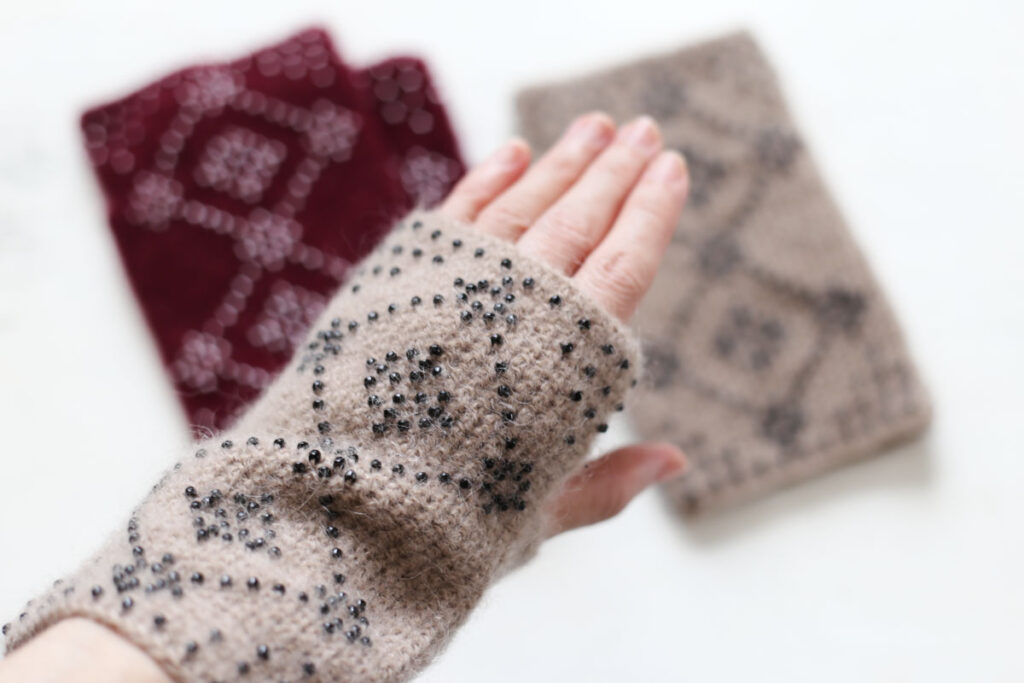
Characteristics of bead crochet works
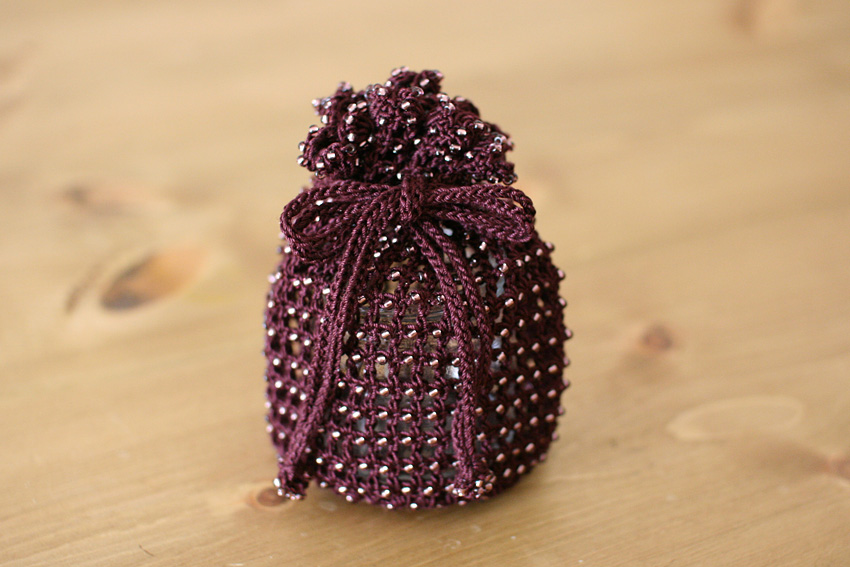
Bead crochet is a technique in which beads that have been threaded onto thread are crocheted one by one as you crochet stitches.
By weaving in beads, you can enjoy a gorgeous look that is different from regular crochet.
In pieces where designs are expressed through the placement of beads, a pre-designed pattern naturally emerges as the crochet progresses.
Combining patterned crochet stitches with bead placement creates a more intricate and artistic look.
Another fun thing about this craft is that you can dramatically change the atmosphere by changing the shine or lack of shine of the beads you use and the color combinations.
Bead crochet can be used to create a wide range of items, from small items such as accessories and pouches to decorating shawls.
The basic steps of bead crochet
At first glance, bead crochet may seem like a special technique, but the basic movements are an extension of crocheting.
However, the concept is slightly different from basic method, and when creating a piece, it often begins with a design to create a pattern using beads.
When actually crocheting, the crocheter follows the bead arrangement and design laid out by the designer, so there is no need for the crocheter to design the pattern from scratch.
Here we will look at the basic steps of bead crochet step by step.
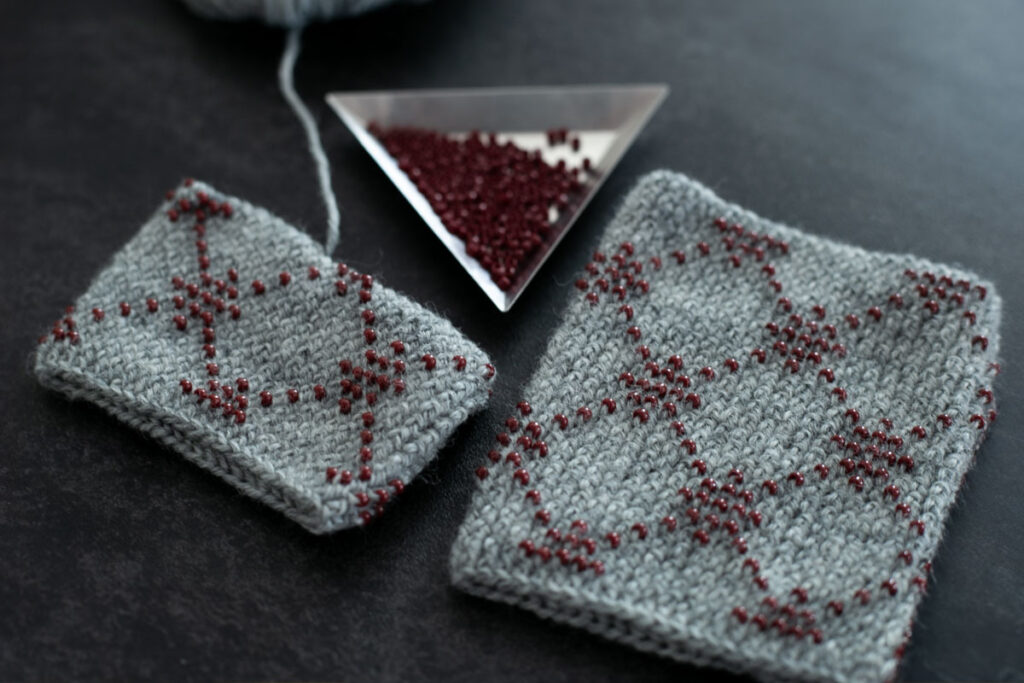
The pattern is expressed by the arrangement of the beads.
Some bead crochet pieces have beads woven into every stitch, while others have beads woven in only in specific areas to create a pre-designed pattern.
In pieces where beads are woven into every stitch, patterns can be created by changing the color scheme of the beads.
Prepare the beads by threading them
When creating a pattern using different bead color combinations, careful planning is required before crocheting begins, in order to thread the beads onto the thread according to the color combination that will make up the pattern.
In pieces where patterns are created by placing beads here and there between stitches, the number of beads needed to create the pattern is threaded onto the thread.
Weave the beads
The way to weave the beads is to use regular crochet stitches, but with the addition of a pulling motion to the beads. The feel is almost the same.
After the time-consuming preparation stage of threading the beads, stitching is a very pleasant process.
When crocheting beads according to the pattern placement, you will need to check the pattern design and crochet the beads into specific stitches.
Actual bead crochet projects
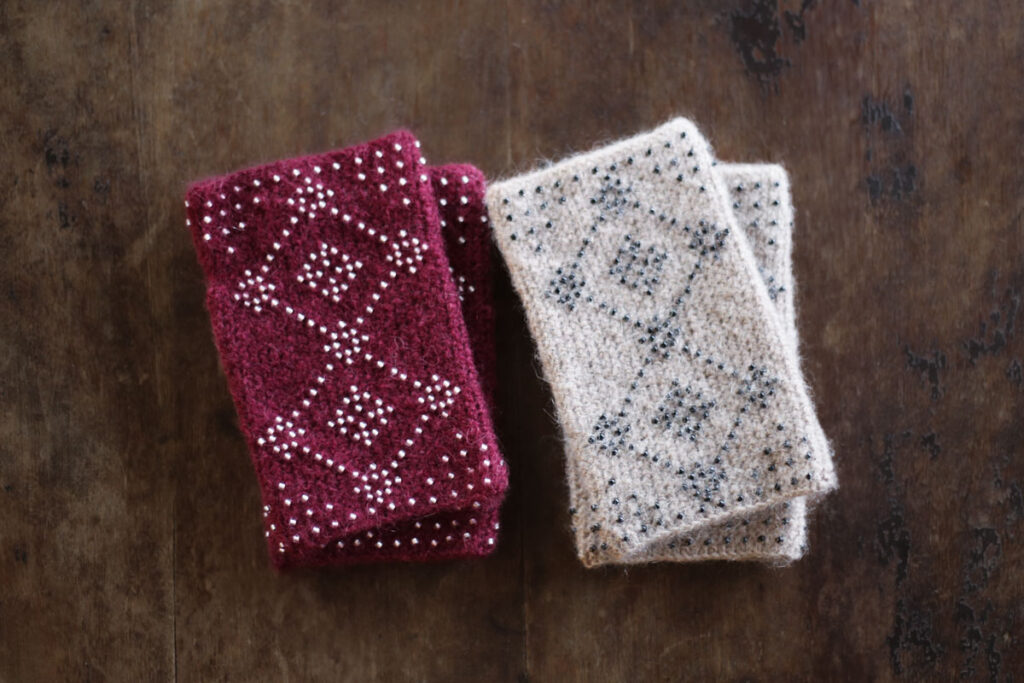
Beaded Crochet Wrist Warmer
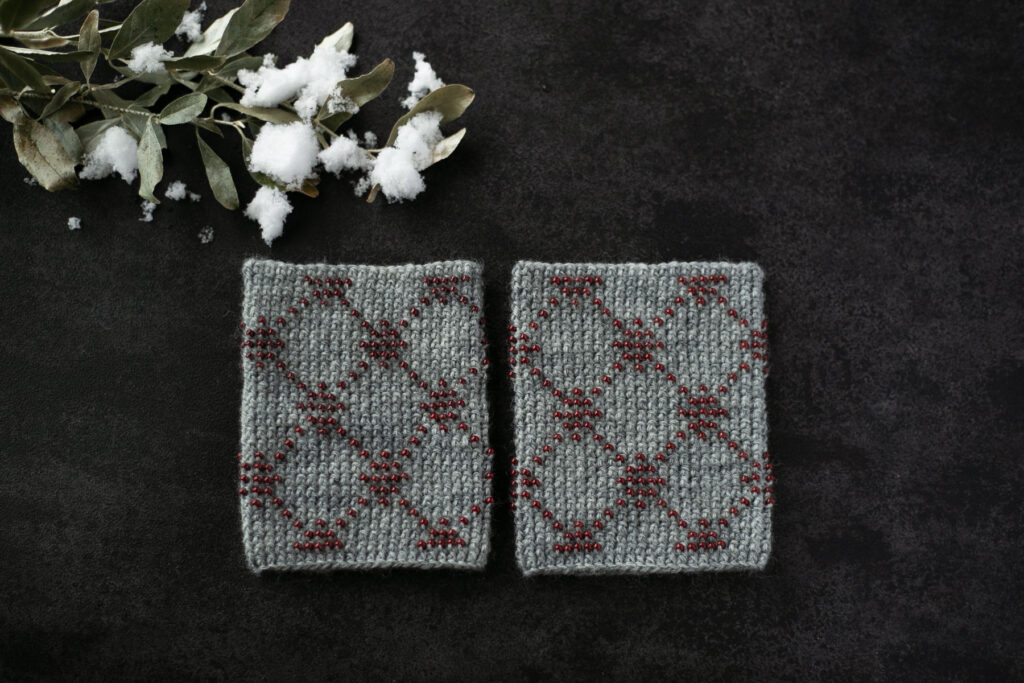
The piece we will introduce this time is a wrist warmer that can be crocheted straight into a cylindrical shape without increasing or decreasing stitches.
The basic crochet stitch is very simple.
A pattern appears when beads are woven into specific positions according to the design.
Use one color of beads.
Beads are threaded onto the thread beforehand, but you don't need to count the exact number at this stage, as long as you have more than the number needed for the pattern.
The beads will appear on the back of the crocheted fabric, so use the back of the crocheted fabric as the front of your project.
What you need
・Medium-fine wool yarn... 25g
Sample work: Motohiro Olympic pure wool medium-fine (25g ball, 95m).
・Large round glass beads...one hand: 324 pieces, both hands: 648 pieces
Sample work: TOHO Marudai beads B-46 (burgundy) used.
・Size 4 crochet hook
・Bead threading needle
Use KAWAGUCHI 10cm bead threading needle.

Crochet Pattern
Finished size
11 cm (length) x 9 cm (width)
gauge
5cm square, 12.5 rows x 13 stitches
Preparation before you start crocheting
Thread 324 beads (enough for one hand) onto a string using a beading needle.
Once you have finished crocheting one side, thread another 324 beads onto the thread before crocheting the other side.
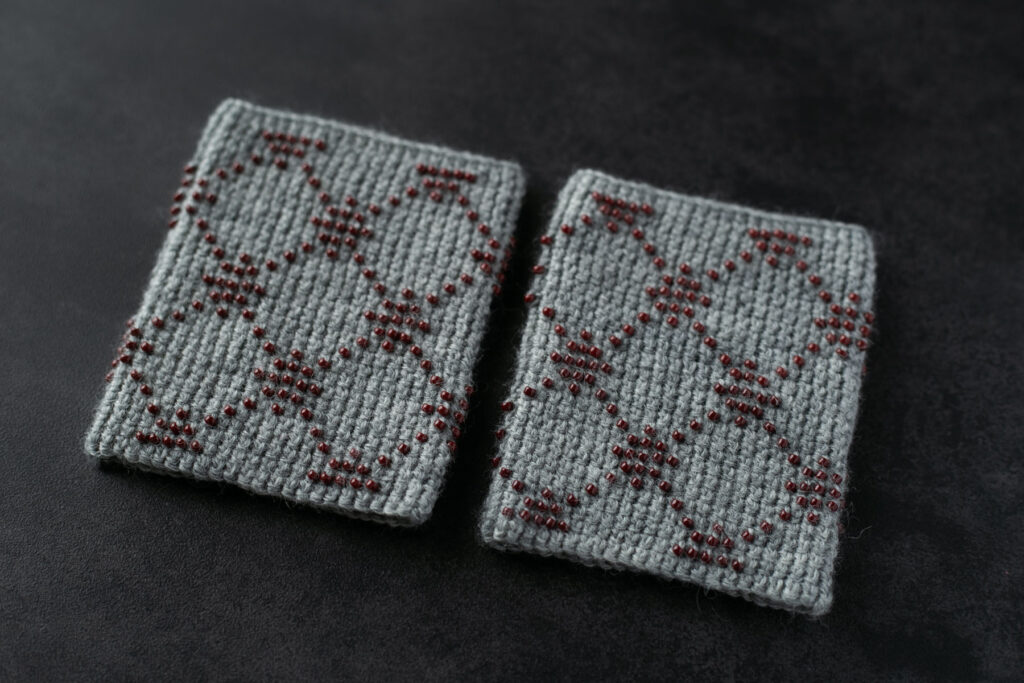
Instructions
1. Make 48 stitches with a stretchy cast-on, then pull through the first stitch to make a loop.
Reference:Crochet Techniques: Mastering the Foundation Single Crochet (FSC)
②In the first row, make a knit stitch.
In the patterns shown in the knitting chart, each square counts as one stitch.
Following the pattern, leave the beads in the white squares and knit beads into the grey squares, completing one circle using a knit stitch.
③In rows 2 to 26, work a single stitch (pick up one stitch on the other side of the top of the stitch in the previous row).
Up to the 25th row, knit the beads according to the pattern, then go around the 26th row without knitting any beads.
Cut the yarn after you finish knitting the 26th row.
④ Knit another identical piece.
First, thread the beads onto the yarn, then knit in the same way following steps ① to ③.
⑤Once both sides are complete, use a steam iron (holding it above the knitted fabric so that only the steam is directed at it) to smooth out the knitted fabric.
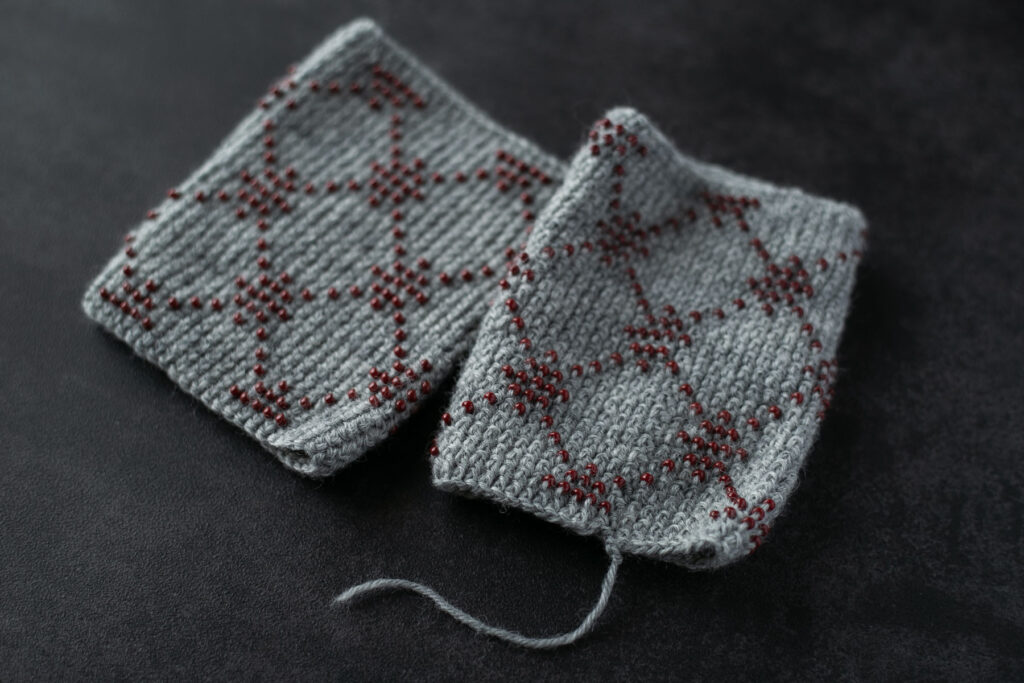
The end of the yarn at the beginning of knitting is processed so that it connects the elastic part of the cast-on stitch.
Pattern release: February 16, 2026
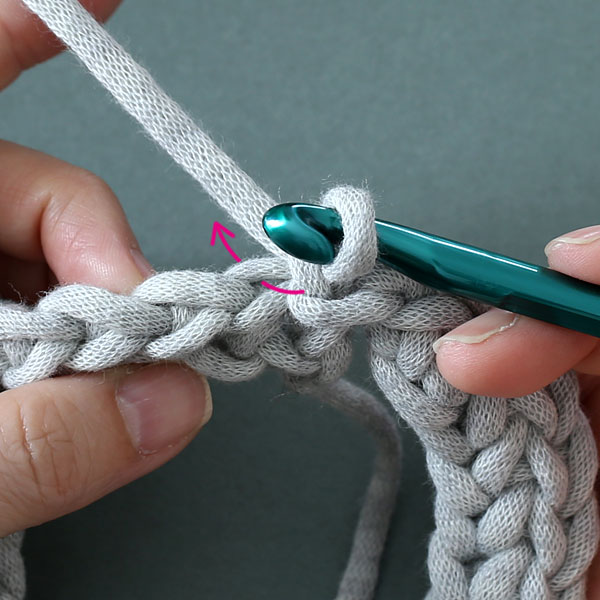
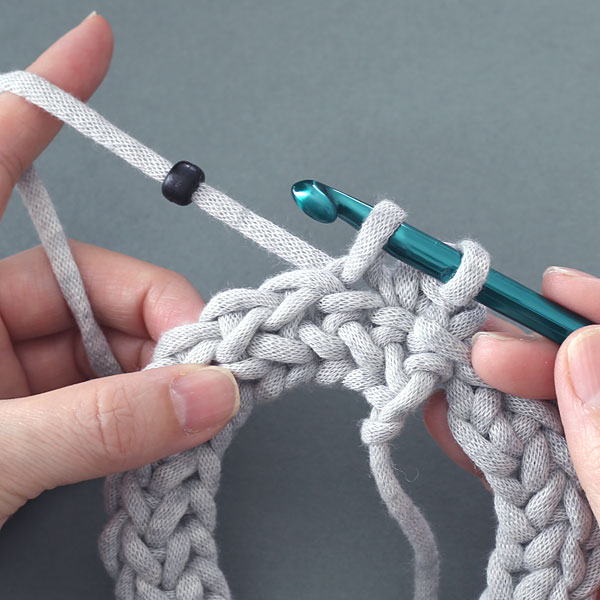
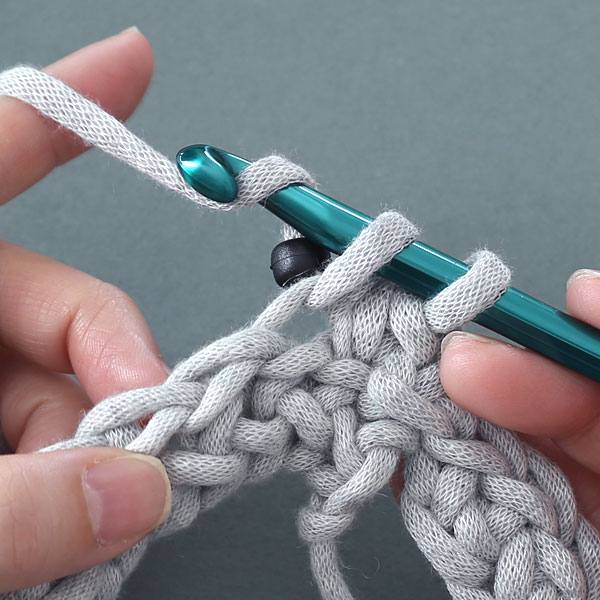
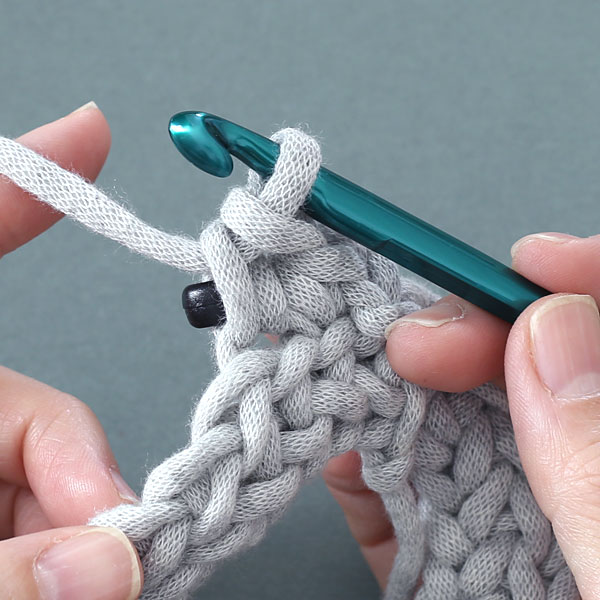
How to weave beads -Striped stitch-
Below are the steps to weave beads into a crochet stitch (thickness of thread and base stitches may differ from the finished product).
You can also work single crochet (sc) in the same way. The only difference is that for single crochet, you insert the hook under the top two loops of the previous row.
Moving forward with beads, future creations
Bead crochet is an attractive technique that allows you to enjoy a wide range of expressions by combining the basics of crochet with beads.
Looking back through history, glass beads have been nurtured through a variety of cultures and techniques, from mass-produced Bohemian glass beads to 19th century European accessories and modern crafts.
Once you understand the basic steps introduced here, you can enjoy creating projects by following the designer's crochet patterns.
Please try creating your own unique and deep piece in the world of bead crochet.
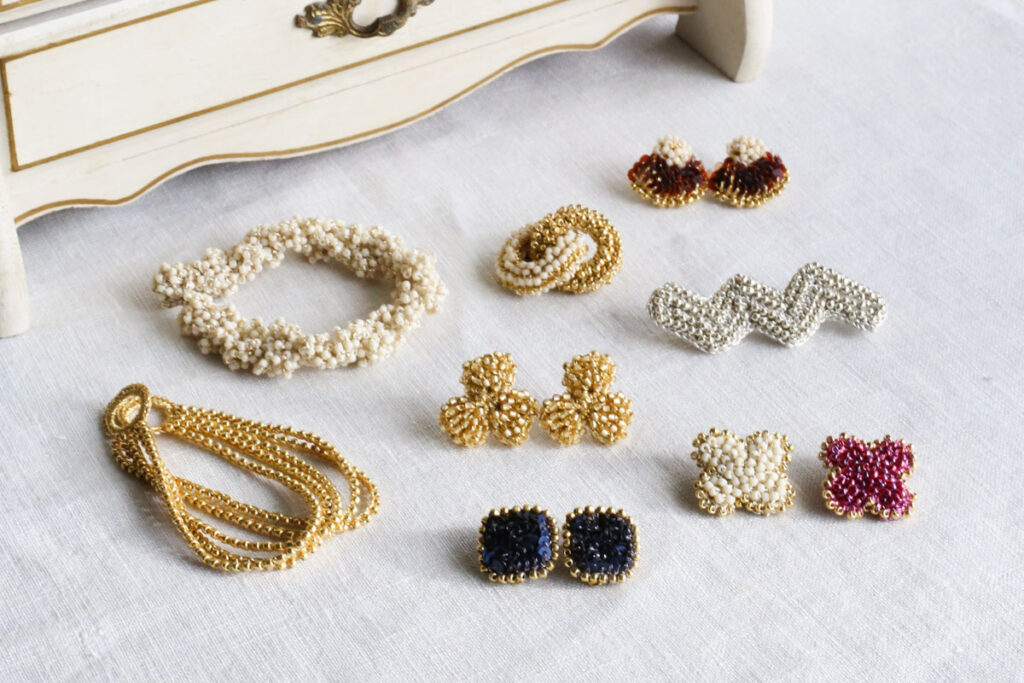
Works that expand the world of bead crochet

Ronique's books
"Crochet Jewelry with Lace Needles" now on sale
The Japanese edition, "Crochet Jewelry with Beads", is out now on Amazon (Kindle & Paperback).
This collection features 24 jewelry designs, showcasing delicate bead crochet techniques.
Includes instructional videos for all pieces!
The next best thing to wrist warmers
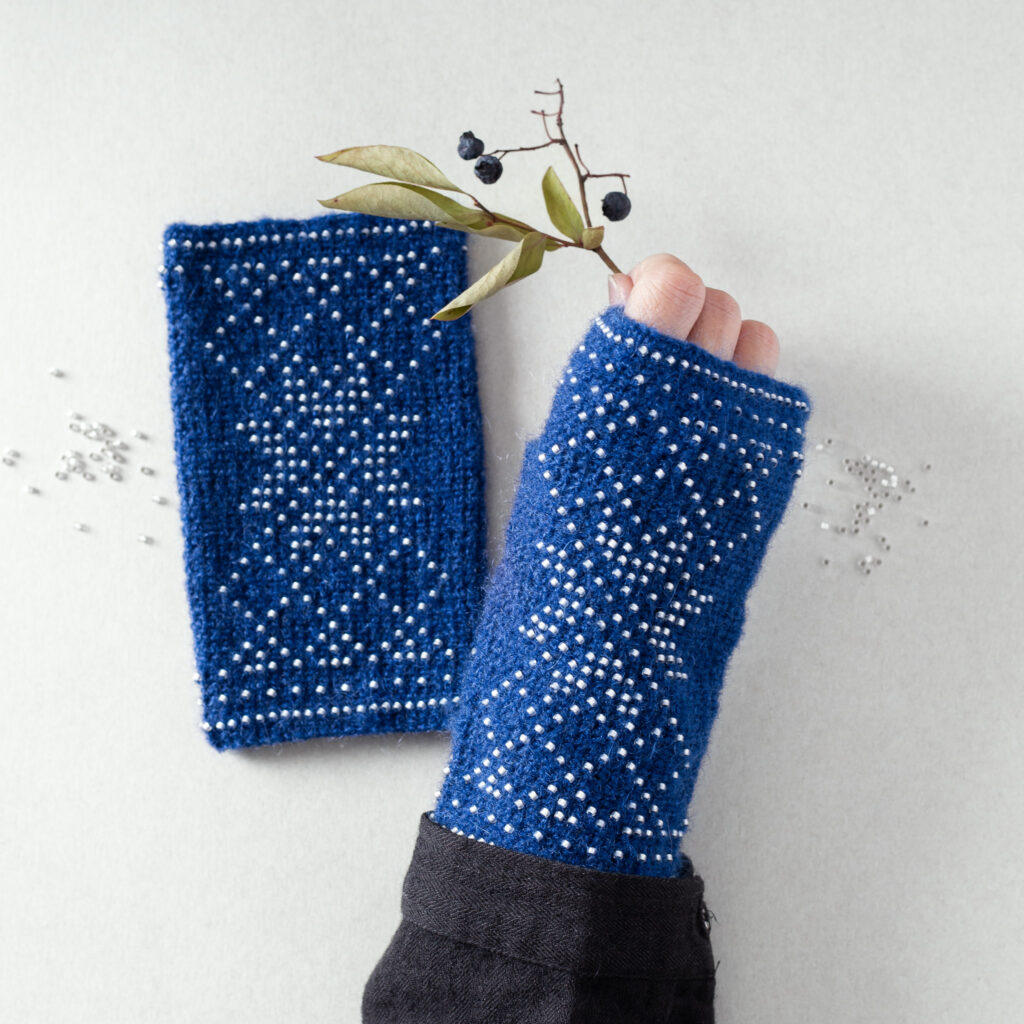
Crochet "Snow Pattern Hand Warmer" Pattern
If you can knit the wrist warmer using the free pattern introduced on this page, you can knit this piece with a little modification.
This is a hand warmer that allows you to expose your thumb.
You can continue knitting in a cylindrical shape without increasing or decreasing the number of stitches.
The pattern is only on the back of the hand, which adds to the glamour but also keeps the number of beads from becoming excessively large.
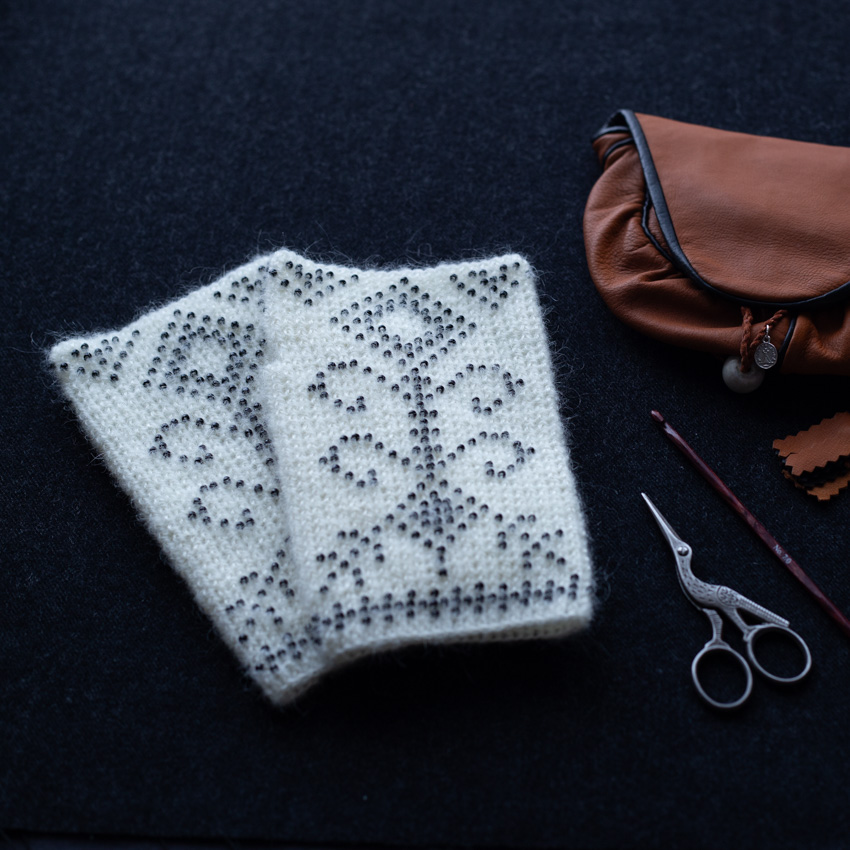
Crochet "Floral Hand Warmer" Pattern
This work is "Snow patterned hand warmersThese hand warmers have a different pattern.
By changing the pattern and color, it can become a fun fashion item that will brighten up the chilly season.
One of the fun things about bead crochet is thinking about matching colors.
If you can't stop bead crocheting, this is the one for you.
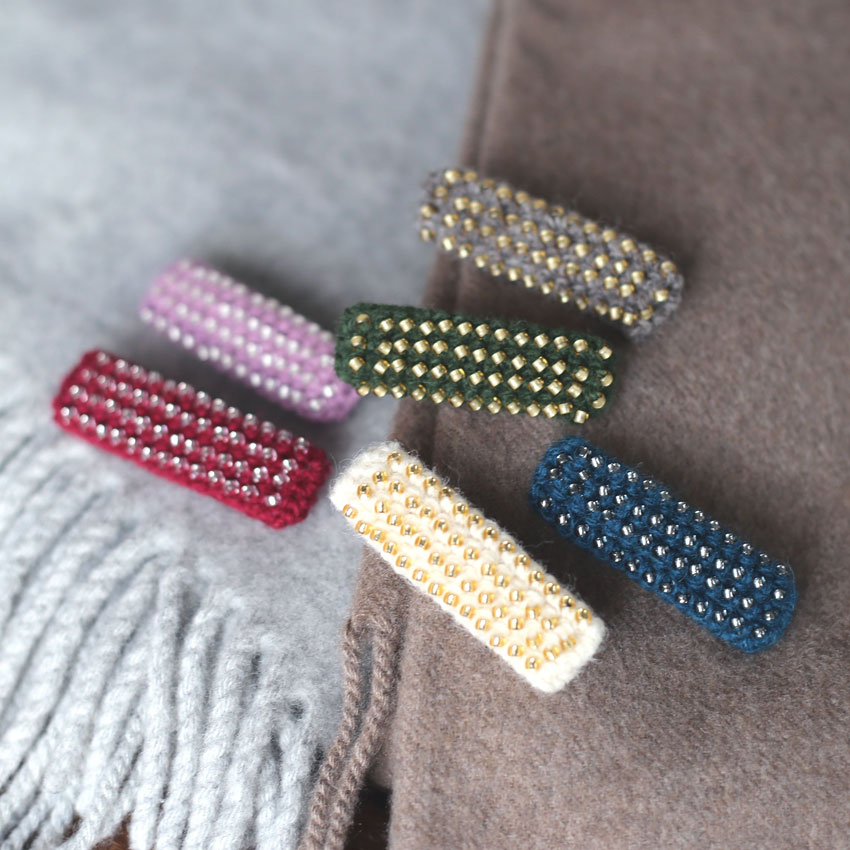
Crochet "Beaded Brooch" Knitting Pattern
This is a small piece that is perfect for practicing beaded jewelry.
The combination of beads and wool blends warmth and brilliance, giving off a gentle elegance.
It can be completed in a short amount of time, so it's fun to knit it in different colors.
It is also recommended for using up leftover yarn.
References and Sources
・British Museum Collection Database
・Corning Museum of Glass (CMoG)
・BEADS ALL OVER THE WORLD
・Murano Online Magazine
・Beadmaking in the Czech Republic: Bohemia's Glass Bead Legacy (beads.co)
・The History of Czech Glass Beads (Artbeads Blog)
・History of Czech Glass (Harlequin Beads)

